Breast‑Down & Buttered: 22‑lb Smoked Turkey in ~4.5 Hours
Juicy meat, crisp skin, and a clean, controlled smoke — finished in about 4½ hours. This high‑heat, practical method centers on a compound butter tucked under and over the skin and a long breast‑down hold so the heat reaches the dark and white meat evenly, producing fast cooking, golden skin, and restrained smoke flavor without endless babysitting. Ready to impress a crowd? Try this for your next holiday or big cook and pull a perfectly moist, slice‑ready 22‑pound bird off the smoker.
Why Big Turkeys Go Wrong (and How This Method Fixes It)
Why Big Birds Fail
Big turkeys fail for a few predictable reasons: the sheer time on the smoker, thin breast meat that dries out long before the dark meat, fat that never properly renders under low heat so the skin stays rubbery, and smoke that goes from aromatic to acrid when you overdo the wood. Poultry is especially vulnerable because its skin and flavor are delicate — heavy, “dirty” smoke deposits bitter creosote and soot on that thin surface, and too much wood quickly overwhelms the meat instead of complimenting it.
The fix is simple in concept and dramatic in result: shorten the danger window and insulate the breast. Aim for a target smoker range of 315–350°F — many cooks prefer 325–350°F for a faster finish — and this recipe uses 350°F as the baseline to speed skin crisping and fat rendering so the breast spends less time exposed to drying heat. At these temps the skin crisps, fat renders faster and shrinks the time the breast is exposed to drying heat. Tucking a compound butter under the skin salts, flavors and bastes the meat from the inside as it melts, while cooking breast-down for the bulk of the smoke keeps the white meat away from direct heat and lets juices redistribute. Finish breast-side up for the last 20–30 minutes on slightly higher heat to set the skin and coax that golden, blistered color.
Expectations matter: a well-executed 22‑pound bird cooked in the target 315–350°F range (many prefer 325–350°F) should land around four to five hours — roughly 4.5 hours is achievable if you manage temps and smoke. Rely on a probe, not the clock: aim for the breast to register about 160°F when you pull it (it will carry over to the safe 165°F while resting) and for thighs to approach the mid‑170s. Practical extras — mild fruit woods in small amounts, dry well-seasoned wood, steady airflow, and resisting the urge to douse with more smoke — keep the flavor clean and let the compound butter, breast‑down positioning and higher heat do the heavy lifting.
Gear, Setup, and Fuel: Clean Heat for a Big Bird

You don’t need an industrial smoker to nail a 22‑pound turkey, but you do need a cooker that can hold steady heat in the 315–350°F window. Good options are a kettle grill set up for indirect cooking, a well‑tuned offset smoker, a pellet grill with accurate temperature control, or a drum‑style smoker that can sustain clean, even heat. The goal isn’t to drown the bird in smoke; it’s to give it a brief, clean kiss of smoke while the heat crisps the skin and renders the fat.
Fuel strategy matters: build a foundation of charcoal—lump for quick heat and responsiveness, or briquettes for steadier, longer burns—and add only a few small wood chunks for flavor. Think light and surgical: two to four fist‑sized chunks of fruitwood or a mild hardwood are enough. Watch the smoke: thin, almost invisible blue smoke means you’re burning clean; thick, white billows are a smothering, bitter smoke that will ruin delicate poultry. If you see white smoke, open a vent, add a bit of fresh charcoal, or pull some wood off the coals to regain a blue burn.
Placement is practical: set the turkey breast‑down over indirect heat on a bare grate if you want maximum airflow and crisping, or use a shallow pan under the bird to catch drips and make cleanup easier. If you use a pan, keep it shallow and don’t fill it with liquid—steam softens skin. Position the pan so it doesn’t block crossflow; you want circulating air all the way around the cavity and breast. For a 22‑lb bird place it so the thickest part of the breast is centered over the coolest part of the cook chamber to prevent overcooking the front while the legs come up.
Thermometer setup is non‑negotiable: use at least two probe thermometers—one inserted into the deepest part of the breast (parallel to the bone) and one into the thickest part of the thigh near the bone—and a third probe or a separate grate‑level thermometer to verify chamber temperature where the bird sits. Calibrate probes before you start, tuck leads through a vent or gasket, and monitor for steady readings. That trio tells you both the bird’s progress and whether your cooker is maintaining that clean, hot environment that produces golden, smoky, not bitter, turkey.
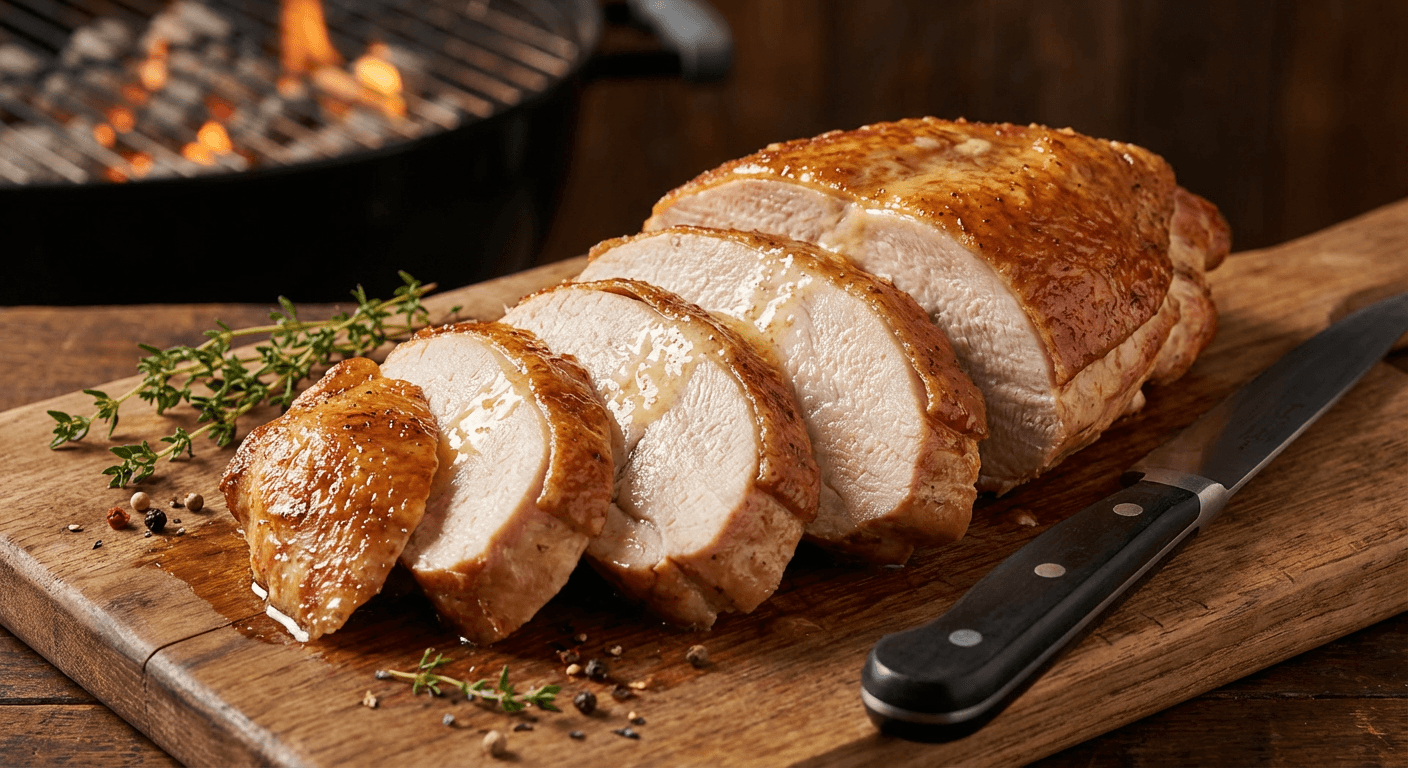
Breast-Down Compound-Butter Smoked Turkey
A 22-pound turkey smoked breast-down with herbaceous compound butter tucked under the skin and a hotter finish for crisp, golden skin and succulent meat.
Ingredients
- Whole turkey (fully thawed)22 lb
- Unsalted butter (softened)12 oz (1 1/2 cups)
- Garlic (minced)4 cloves
- Fresh thyme (chopped)3 tbsp
- Fresh rosemary (chopped)2 tbsp
- Lemon zestZest of 1 lemon
- Kosher salt2 tsp (for butter) + 1 tbsp (for skin)
- Black pepper (freshly cracked)1 tsp
- Smoked paprika1 tsp
- Neutral oil (vegetable or canola)1 tbsp
- Apple or cherry wood chunks2–3 small chunks
- Water (for pan)1–2 cups
- Kitchen twineAs needed
Steps
- 1
Remove giblets and neck and pat the 22-lb turkey dry inside and out.
- 2
Tie the legs with kitchen twine and tuck the wing tips under the back.
- 3
Season the cavity lightly with 1 tsp kosher salt and a few grinds of black pepper and add a halved lemon and a few sprigs of thyme if you like.
- 4
Combine 12 oz softened butter with 4 minced garlic cloves, 3 tbsp chopped thyme, 2 tbsp chopped rosemary, lemon zest, 2 tsp kosher salt, 1 tsp black pepper, and 1 tsp smoked paprika to make the compound butter.
- 5
Gently separate the breast meat from the skin with your fingers and spread most of the compound butter evenly under the breast skin and around the thigh areas.
- 6
Rub any remaining compound butter over the skin and lightly brush the skin with 1 tbsp neutral oil to promote browning.
- 7
Preheat the smoker to a steady 350°F (175°C) and set up for indirect heat with a drip pan underneath the grate.
- 8
Place a shallow pan with 1–2 cups of hot water beneath where the turkey will sit to stabilize temperature and humidity; a shallow amount is fine, but avoid a deep pan or large volume of liquid that will create steam and soften the skin.
- 9
Add 2–3 small chunks of apple or cherry wood for a light, sweet smoke.
- 10
Place the turkey breast-down on a roasting rack centered over the drip pan.
- 11
Smoke the turkey at 350°F for 4 hours, maintaining steady temperature and adding small wood chunks only if smoke falls off.
- 12
After 4 hours, increase the smoker temperature to 425°F to crisp the skin and carefully flip the turkey breast-up using two spatulas or heavy gloves.
- 13
Continue roasting at the higher temperature until the thickest part of the breast reaches 160°F and the thigh reaches at least 165°F for safety. Many pitmasters prefer 170–175°F for thigh texture, anticipating about 5–10°F of carryover—avoid pushing much higher than that to prevent dryness.
- 14
Remove the turkey from the smoker and tent loosely with foil.
- 15
Let the turkey rest for 20–30 minutes to allow carryover cooking and juices to redistribute.
- 16
Carve and serve the turkey, spooning pan juices over the slices for added moisture and flavor.
A 22-pound turkey smoked breast-down with herbaceous compound butter tucked under the skin and a hotter finish for crisp, golden skin and succulent meat.
Ingredients
- Whole turkey (fully thawed)22 lb
- Unsalted butter (softened)12 oz (1 1/2 cups)
- Garlic (minced)4 cloves
- Fresh thyme (chopped)3 tbsp
- Fresh rosemary (chopped)2 tbsp
- Lemon zestZest of 1 lemon
- Kosher salt2 tsp (for butter) + 1 tbsp (for skin)
- Black pepper (freshly cracked)1 tsp
- Smoked paprika1 tsp
- Neutral oil (vegetable or canola)1 tbsp
- Apple or cherry wood chunks2–3 small chunks
- Water (for pan)1–2 cups
- Kitchen twineAs needed
Steps
- 1
Remove giblets and neck and pat the 22-lb turkey dry inside and out.
- 2
Tie the legs with kitchen twine and tuck the wing tips under the back.
- 3
Season the cavity lightly with 1 tsp kosher salt and a few grinds of black pepper and add a halved lemon and a few sprigs of thyme if you like.
- 4
Combine 12 oz softened butter with 4 minced garlic cloves, 3 tbsp chopped thyme, 2 tbsp chopped rosemary, lemon zest, 2 tsp kosher salt, 1 tsp black pepper, and 1 tsp smoked paprika to make the compound butter.
- 5
Gently separate the breast meat from the skin with your fingers and spread most of the compound butter evenly under the breast skin and around the thigh areas.
- 6
Rub any remaining compound butter over the skin and lightly brush the skin with 1 tbsp neutral oil to promote browning.
- 7
Preheat the smoker to a steady 350°F (175°C) and set up for indirect heat with a drip pan underneath the grate.
- 8
Place a shallow pan with 1–2 cups of hot water beneath where the turkey will sit to stabilize temperature and humidity; a shallow amount is fine, but avoid a deep pan or large volume of liquid that will create steam and soften the skin.
- 9
Add 2–3 small chunks of apple or cherry wood for a light, sweet smoke.
- 10
Place the turkey breast-down on a roasting rack centered over the drip pan.
- 11
Smoke the turkey at 350°F for 4 hours, maintaining steady temperature and adding small wood chunks only if smoke falls off.
- 12
After 4 hours, increase the smoker temperature to 425°F to crisp the skin and carefully flip the turkey breast-up using two spatulas or heavy gloves.
- 13
Continue roasting at the higher temperature until the thickest part of the breast reaches 160°F and the thigh reaches at least 165°F for safety. Many pitmasters prefer 170–175°F for thigh texture, anticipating about 5–10°F of carryover—avoid pushing much higher than that to prevent dryness.
- 14
Remove the turkey from the smoker and tent loosely with foil.
- 15
Let the turkey rest for 20–30 minutes to allow carryover cooking and juices to redistribute.
- 16
Carve and serve the turkey, spooning pan juices over the slices for added moisture and flavor.
Don't Over-Smoke
Too much wood — especially resinous species — will lay down bitter, acrid soot, and a low‑and‑slow cook under constant heavy smoke commonly produces rubbery skin and a full‑on “smoke‑bomb” turkey. Prioritize clean combustion and proper venting, use restrained, timed smoke bursts (or raise the grate temp), and avoid a dirty fire—especially in cold, damp conditions where smoke clings.
Frequently Asked Questions
Bringing It All Together: Confident Turkey on a Deadline
The method boils down to four simple pillars that play together: a well-seasoned compound butter slid under the skin to bathe the white meat in flavor and steam, cooking breast-down for the bulk of the time so the dark meat protects and keeps the breast juicy, turning the pit up a notch so the skin crisps to a mahogany crackle, and using restrained, clean smoke so you get perfume without bitter soot. When the butter melts it glazes the skin from inside out, delivering a satin sheen and herb-scented steam; the higher cooking window (aim roughly 325–350°F as a guideline) helps render fat and tighten skin without adding long, drying hours.
This is a repeatable, temperature-driven way to move from hit-or-miss holiday turkey to reliable results. Use a leave-in probe, watch pit stability rather than the clock, and learn the feel of carryover heat: for juiciness, pull breasts around 160–162°F and let them climb to 165°F while resting; make sure the thigh reaches a safe finished temp (around 165–175°F depending on your thermometer and preference). A steady process—consistent pit temp, the same amount of butter, same placement breast-down—turns luck into a dependable outcome.
Once you’ve mastered the basics, experiment and log everything. Try lemon-thyme butter one week, smoked-paprika and garlic the next; tuck aromatics like halved citrus, onion, or fresh thyme into the cavity for subtle lift; and if you want a showpiece finish, flip breast-up for the last 10–20 minutes to glaze and tighten the skin. Keep a simple cook log—pit temp, wood type, butter recipe, probe temps, total time and final appearance—and you’ll be dialing in a version tailored to your pit and palate in just a couple of runs. Confident, juicy turkey on a deadline is less about tricks and more about repeatable choices and a willingness to tweak.