Chamorro-Style Whole Roast Pig: A Backyard Island Feast
At a work party last weekend I watched a whole pig turn golden and crackling as it rotated slowly over glowing coals, repeatedly lacquered with a savory soy–vinegar–garlic marinade while laughter and island tunes gathered the crowd around the pit. Read on for a practical, step-by-step guide — how to choose the right pig size, build or source a roaster, mix an authentic Chamorro-style marinade, and master the roasting and basting techniques that make the skin sing and the meat unforgettable.
What Makes Chamorro-Style Roast Pig Special
Chamorro cooking leans into bold, bright flavors — think savory soy and sharp vinegar lifted by lots of garlic, fresh ginger, black pepper, and sweet onion. That tangy, umami-forward marinade soaks into the meat and caramelizes on the skin as the pig roasts, giving each bite a lively balance of salt, acid, and aromatic warmth. The aroma alone — garlicky, slightly sweet, with a clean vinegary lift — announces a feast before the first plate is even set.
On Guam and in Chamorro communities, a whole roast pig is more than dinner; it’s the centerpiece of celebration. Birthdays, holidays, work parties, and big family gatherings turn into all-day communal rituals where people take shifts tending the fire, basting the animal, and telling stories while the pig slowly cooks to tender perfection. Practical note: frequent basting with that soy‑and‑vinegar mix keeps the meat moist and builds a glossy, savory crust, and carving is an occasion — pass plates family‑style and keep napkins handy.
Chamorro-style roast pig sits in a family of global whole-hog traditions, but its identity is distinct. Unlike Carolina whole-hog barbecue, which leans on a peppery-vinegar mop and a pulled‑pork finish, the Chamorro profile is soy-forward and garlicky with bright vinegar notes rather than a pure pepper tang. It’s different from the crisp, herb‑forward Spanish‑influenced lechon and from the smoky, underground-cooked kalua pig of Hawaii — Chamorro roast balances savory, salty, and acidic flavors while still celebrating crisp skin and tender flesh. Above all, the ritual carries a deep respect for the animal and the people gathered: cooking a whole pig is an act of gratitude and sharing, a way to honor the life that feeds the community.
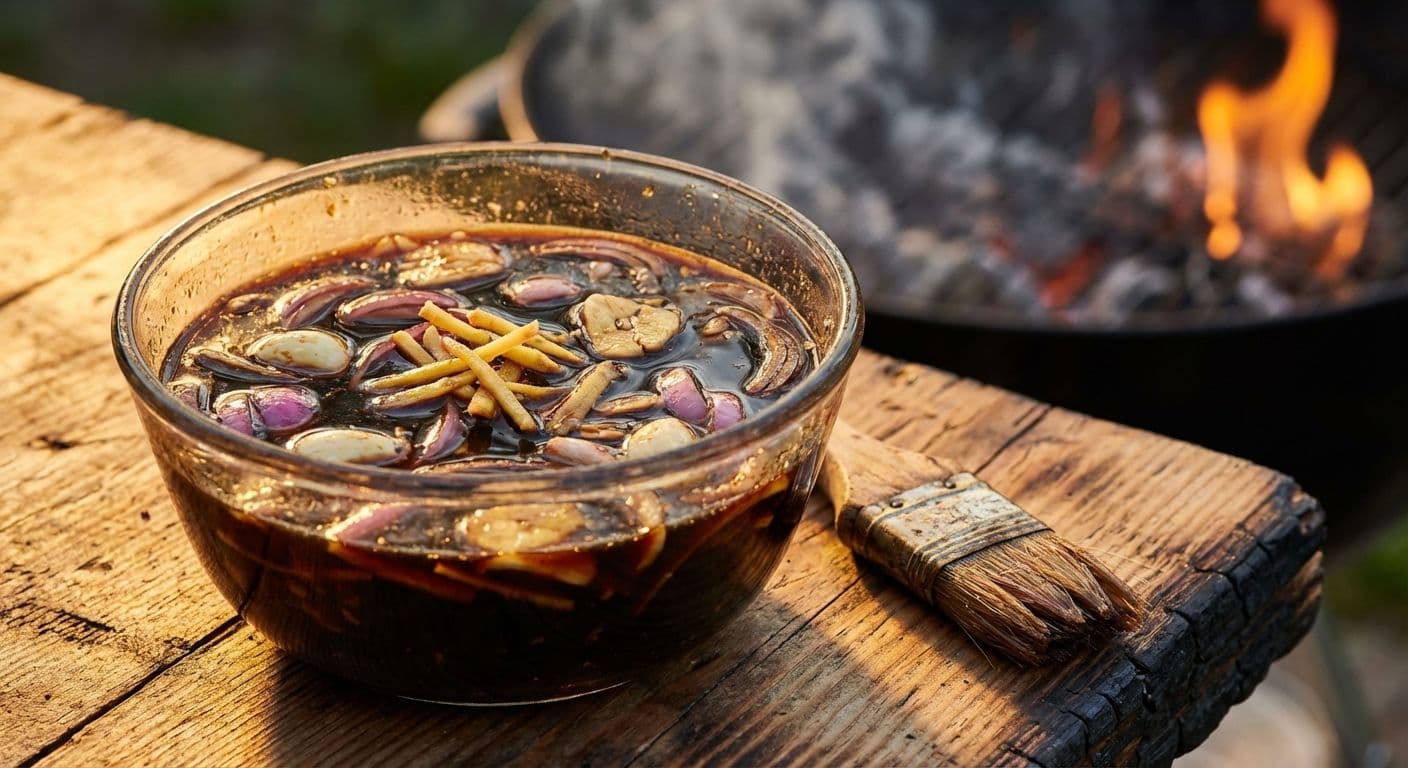
Chamorro-Style BBQ Marinade for Whole Roast Pig
A savory, tangy marinade built on soy sauce and apple cider vinegar with garlic, ginger, black pepper, and onion to baste and flavor a whole roast pig. This batch is scaled for a 10-pound portion and includes clear guidance to scale up for an entire hog.
Ingredients
- Kikkoman soy sauce2 cups (per 10 lb pig)
- Apple cider vinegar1 cup (per 10 lb pig)
- Garlic, minced10 cloves (per 10 lb pig)
- Fresh ginger, grated2 tablespoons (per 10 lb pig)
- Black pepper, freshly ground2 teaspoons (per 10 lb pig)
- Onion, finely chopped1 cup (per 10 lb pig)
Steps
- 1
Whisk soy sauce, apple cider vinegar, minced garlic, grated ginger, black pepper, and chopped onion together in a large bowl until combined.
- 2
Reserve one-third of the marinade in a separate container for basting and refrigerate it untouched.
- 3
Pour the remaining marinade over the pig, rubbing it thoroughly into the cavity and under the skin where possible, and place the pig in a covered container to marinate.
- 4
Marinate the pig for 8–24 hours under refrigeration (at or below 40°F / 4°C), turning once halfway through for even penetration. If you must marinate outdoors briefly (for example during cook setup), keep the meat on ice in a cooler and monitor temperatures closely.
- 5
For scaling, multiply each ingredient quantity by one for every 10 pounds of whole pig or scale proportionally to match your pig's weight (for example, a 100 lb hog needs 10 times the per-10 lb batch).
- 6
Preheat your spit, pit, or roaster to maintain a steady 250–300°F before you begin cooking.
- 7
Begin roasting the pig, keeping heat steady and rotating consistently to ensure even browning across the skin and shoulders.
- 8
Warm the reserved marinade before basting and apply every 15–30 minutes, discarding any marinade that has contacted raw meat or boiling it thoroughly before reuse.
- 9
Cook until the thickest part of the shoulder or thigh reaches at least 145°F and allow a 3-minute rest for the safe minimum per USDA guidance; use an instant-read thermometer to verify doneness. For shreddable/pull-apart texture on shoulders or hams, you can continue cooking until 195–205°F.
- 10
Tent the cooked pig loosely with foil and rest for 30–45 minutes to let juices redistribute before carving.
- 11
Plan roughly 10–15 minutes per pound at 250–300°F as a planning estimate and adjust the final schedule based on thermometer readings and your pit's behavior.
- 12
Carve the pig and serve with additional warmed reserved marinade or pan juices on the side for dipping.
A savory, tangy marinade built on soy sauce and apple cider vinegar with garlic, ginger, black pepper, and onion to baste and flavor a whole roast pig. This batch is scaled for a 10-pound portion and includes clear guidance to scale up for an entire hog.
Ingredients
- Kikkoman soy sauce2 cups (per 10 lb pig)
- Apple cider vinegar1 cup (per 10 lb pig)
- Garlic, minced10 cloves (per 10 lb pig)
- Fresh ginger, grated2 tablespoons (per 10 lb pig)
- Black pepper, freshly ground2 teaspoons (per 10 lb pig)
- Onion, finely chopped1 cup (per 10 lb pig)
Steps
- 1
Whisk soy sauce, apple cider vinegar, minced garlic, grated ginger, black pepper, and chopped onion together in a large bowl until combined.
- 2
Reserve one-third of the marinade in a separate container for basting and refrigerate it untouched.
- 3
Pour the remaining marinade over the pig, rubbing it thoroughly into the cavity and under the skin where possible, and place the pig in a covered container to marinate.
- 4
Marinate the pig for 8–24 hours under refrigeration (at or below 40°F / 4°C), turning once halfway through for even penetration. If you must marinate outdoors briefly (for example during cook setup), keep the meat on ice in a cooler and monitor temperatures closely.
- 5
For scaling, multiply each ingredient quantity by one for every 10 pounds of whole pig or scale proportionally to match your pig's weight (for example, a 100 lb hog needs 10 times the per-10 lb batch).
- 6
Preheat your spit, pit, or roaster to maintain a steady 250–300°F before you begin cooking.
- 7
Begin roasting the pig, keeping heat steady and rotating consistently to ensure even browning across the skin and shoulders.
- 8
Warm the reserved marinade before basting and apply every 15–30 minutes, discarding any marinade that has contacted raw meat or boiling it thoroughly before reuse.
- 9
Cook until the thickest part of the shoulder or thigh reaches at least 145°F and allow a 3-minute rest for the safe minimum per USDA guidance; use an instant-read thermometer to verify doneness. For shreddable/pull-apart texture on shoulders or hams, you can continue cooking until 195–205°F.
- 10
Tent the cooked pig loosely with foil and rest for 30–45 minutes to let juices redistribute before carving.
- 11
Plan roughly 10–15 minutes per pound at 250–300°F as a planning estimate and adjust the final schedule based on thermometer readings and your pit's behavior.
- 12
Carve the pig and serve with additional warmed reserved marinade or pan juices on the side for dipping.
Gear, Pig Size, and Setup: Building Your Backyard Roaster
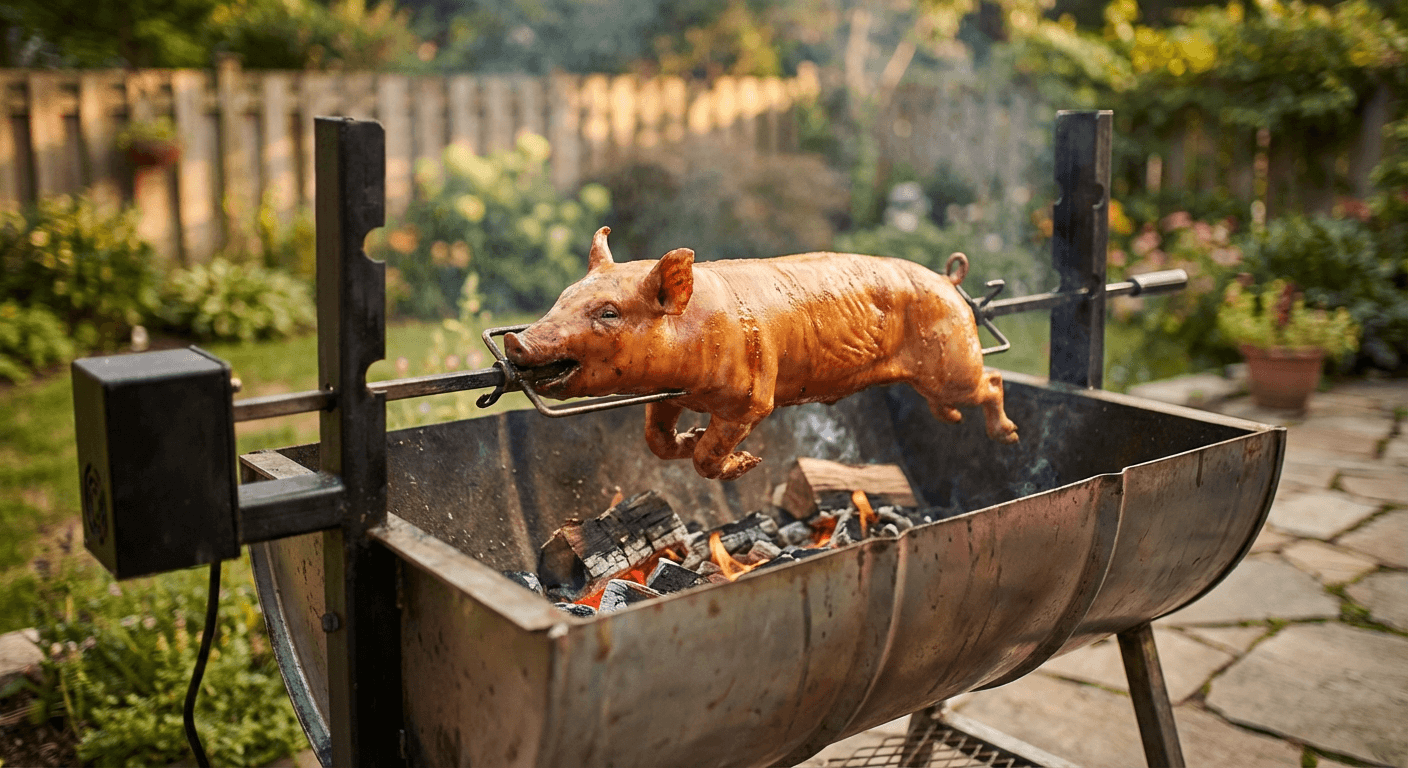
Start with the right pig for the party. For most backyard gatherings a whole dressed pig of roughly 30 pounds is the sweet spot — big enough to be a centerpiece and feed roughly 15–25 guests depending on sides and appetites, but small enough to handle with a modest rig. If your RSVP list grows, scale up: two pigs or a single 50–80 pound animal will cover larger crowds, but expect longer cook times, more fuel, and a sturdier spit. For a do-it-yourself roaster you don’t need a commercial rig: a repurposed metal tub or long trough makes an excellent firebox. Line the bottom with charcoal or split hardwood, weld or bolt a heavy-duty spit across the top, and mount a small electric motor or gearbox to keep the spit turning slowly and steadily. Add a drip pan under the pig to catch basting juices and protect the fire, and create heat zones by banking coals where you want more color and leaving cooler sections for gentler cooking.
Fuel choice and careful setup make the difference between leathery skin and that perfect crackle. Charcoal gives steady, controllable heat and is easier to maintain for first-timers; wood (mango, guava, oak, or hickory) layers in that island-smoke aroma you crave but needs more tending and respect. Always contain embers, keep the rig well ventilated and positioned away from structures, and have gloves and a water source handy. Secure the pig carefully so it turns true: run the spit rod through the mouth and out the hind cavity or use crossbars through the body, clamp with stainless U-bolts or heavy-gauge wire, and tie the legs close to the body so nothing flops during rotation. Delicate bits — ears, snout, and tail — are thin and will burn long before the shoulder and ham are done; protect them with little foil “hats,” tuck the tail under the body, or position those parts toward the cooler side of the fire. Keep your temperature moderate and steady rather than blasting the coals — a gentle, even heat produces juicy meat and an evenly crisped skin; if you want extra crunch, move coals closer or raise heat for the final 15–30 minutes of the roast while watching those foil-shielded tips.
Plan for Time & Safety
This is a long, high‑responsibility cook — use a reliable probe thermometer and cook to a safe internal temperature (145°F with a 3‑minute rest), or 195–205°F if you want pull‑apart meat; monitor fuel and never leave the pit unattended. Keep raw and cooked items separate, set up a sanitary carving station with gloves and sharp knives, and have coolers ready to rapidly chill leftovers.
Roasting, Basting, and Serving: Bringing the Pig to the Party
Roast day starts long before guests arrive: pat the skin bone-dry, then lightly coat it with salt so the surface can draw out moisture and tighten into that coveted crackle. If you like aromatics, tuck a few halved lemons, smashed garlic cloves, lemongrass stalks or whole onions into the cavity — they perfume the meat without overpowering the pig’s natural sweetness. Secure the carcass evenly on the spit, trussing legs and head so it rotates true, and set your coals for a steady, low fire; even heat is the secret to juicy shoulders and hams and skin that browns uniformly rather than blistering in patches.
Use your Chamorro-style marinade as the workhorse baste: a balance of soy sauce, tangy vinegar, garlic, ginger, black pepper and onion makes a glossy, savory glaze that layers flavor as the cook goes on. Start basting once the skin has set — every 20–30 minutes early in the day builds color and depth without soaking the rind. Apply thin coats with a mop or brush, concentrating on the meatier areas first; as the skin begins to turn deep mahogany, back off basting directly on the crispiest spots so you don’t steam them. Thin, frequent passes will caramelize rather than drown the skin.
Look for visual and temperature cues to call it done: the skin should be a deep mahogany with evenly blistered patches and the juices running clear when you pierce the ham. For texture, check internal temps in the thickest parts — for pullable, fall-apart shoulders and hams aim for roughly 195°F–205°F; if you prefer sliceable cuts, target the 160°F–170°F range. To preserve crisp skin while keeping the meat succulent, let the skin dry out early and reserve heavier basting for the meat; save any final flame or coal-raised heat for the last 15–30 minutes to blister and snap the rind. Rest the whole pig 30–60 minutes under loose foil so juices redistribute, then carve for a crowd by breaking down into shoulders (shred or slice), hams (slice or chunk), belly (crispy, fatty slices) and the most prized shards of crackling to scatter on top. Serve simply — bowls of steamed rice, bright finadene-style dipping sauce, tangy slaws, pickled vegetables or grilled pineapple are ideal — so every bite celebrates the smoky, savory richness of the roast.
Closing Thoughts: Island Flavor, Backyard Style
A whole Chamorro-style roast pig is more than a recipe — it’s a ritual that brings people together. The sight of glossy, caramelized skin, the sound of crisp crackle as the first slice is pulled away, and the steam of garlicky, tangy juices rising into the air all anchor the moment. Done right, the pig becomes an unforgettable centerpiece that honors the animal and rewards the time and care you put in.
If you don’t yet have a full roaster, don’t let that stop you. The same Chamorro-style marinade and basting approach translates beautifully to pork shoulder, ribs, or a whole chicken — smaller cuts are perfect practice. Adjust cooking times and temperatures, use a covered smoker or oven for long, slow cooks and finish over direct heat for crisp skin, and always rest the meat before carving so the juices redistribute.
Plan ahead for your next big celebration — set aside the time, pick your team for basting and tending the fire, and round out the menu with bright, simple sides that let the roast shine. Bring a touch of island BBQ to your backyard and you’ll create memories people talk about long after the plates are cleared. If you’d like the exact marinade I use for these roasts, I’m happy to share it so you can start experimenting right away.