I Made a Delicious Mistake: The Turkey That Took Over Our Calendar
What started as a nervous, first-time smoked turkey at Thanksgiving — an experiment I didn’t expect to go well — somehow came out smoky, golden, and irresistible, and now everyone insists it’s the only turkey we’ll ever have. Read on and I’ll show you how to recreate that accidental triumph: the techniques to nail smoked turkey, keep it impossibly moist, and adapt the method for weeknight dinners, backyard cookouts, and every holiday in between.
From One Holiday Experiment to “You’re Doing Turkey Every Year Now”
I remember the first time I lit the smoker for Thanksgiving like it was a small, delicious act of rebellion — risky, a little reckless, and completely unnecessary on paper. We expected a nervous hour of checking skin and temp, but what came out was a revelation: skin bronzed and whisper-crisp, meat threaded with smoke and still juicy to the bone, a scent that pulled people out of the other room. The compliments started as polite curiosity and ended with firm decree: this was now the way we did turkey.
That jump from casual griller to official turkey cook happens because smoked turkey, when done right, isn't just impressive — it's forgiving. Low-and-slow smoke tames the bird, giving time for connective tissue to relax and for smoke to build flavor without overcooking the breast. A reliable probe thermometer, a light brine or a schmear of butter under the skin, and patience on the smoker will usually beat the panic of oven-watching — note that a whole turkey typically takes multiple hours (commonly 3–6+ hours depending on temperature and size); for faster cooks, spatchcocking or smoking just the breast can often take an hour or two. Tip: tuck the turkey on a cooler part of the cooker if the skin is catching too fast, and let it rest loosely tented so juices redistribute and carving becomes effortless.
Once that one glorious bird earns you the title, it’s easy to see why the tradition spreads beyond Thanksgiving. Game days, summer cookouts (try a smoked turkey breast for faster turnaround), and lazy Sunday dinners all get elevated by that sweet, woody aroma and moist, sliceable meat. Think of the smoker as a year-round oven replacement: pick fruit woods for lighter smoke, plan for a longer morning cook on big-game weekends, and save the drippings for sandwiches and gravies — your ‘mistake’ will probably become the household standard, and honestly, worse fates exist.
The Chosen Smoker
Smoke one glorious turkey and—poof—you’re the family’s designated pitmaster for life: expect spontaneous requests, holiday martyrdom, and lots of warm praise. Accept the fate and make it manageable: standardize a fail‑safe brine-and-smoke routine, keep sliced leftovers in the freezer for emergencies, and use a simple calendar to avoid surprise orders.
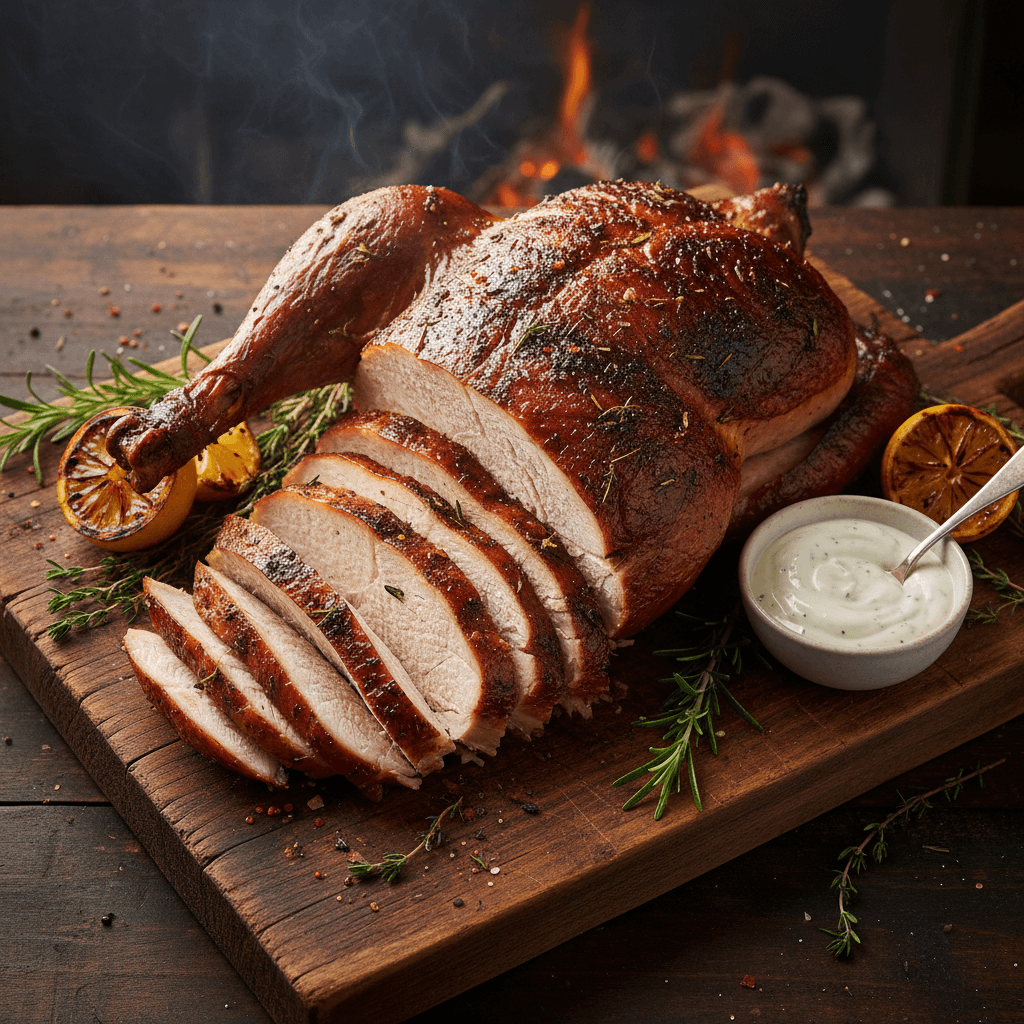
All‑Season Smoked Turkey
A reliable, juicy smoked turkey you can run year‑round — brine or dry‑brine, spatchcock for speed. Cook time: ~3–6 hours depending on bird size and smoker temperature (see steps 12 and 16 for temperature options and pull temps). You can smoke low‑and‑slow at 225–275°F for a classic smoky, gentler cook, or 300–325°F for a faster roast or spatchcocked bird.
Ingredients
- Whole turkey10–14 lb (adjust salt/time for size)
- Kosher salt1 cup (for wet brine) or 1 tbsp per 4 lb (for dry brine)
- Brown sugar1/2 cup (optional for brine)
- Water1–2 gallons (enough to cover for wet brine)
- Aromatics for brine4–6 bay leaves, 1 tbsp peppercorns, 4 smashed garlic cloves, citrus halves
- Melted butter or olive oil1/2 cup
- Simple rub (paprika, garlic powder, onion powder, black pepper, dried thyme)3–4 tbsp total
- Wood chunks or chips2–3 cups (apple, cherry, pecan for mild; oak or light hickory for more body)
- Alabama white sauce (optional)1 cup mayonnaise, 1/4 cup apple cider vinegar, 1 tbsp lemon juice, 1 tsp black pepper, 1 tsp prepared horseradish
- Pan gravy or BBQ sauce (optional)To taste
- Giblets and neck (optional)From turkey cavity for gravy or stock
Steps
- 1
Thaw the turkey in the refrigerator — roughly 24 hours per 4–5 lb (about 2–4 days for a 10–14 lb bird) — until fully pliable.
- 2
Remove giblets and neck from cavities and set them aside for gravy or discard.
- 3
Pat the turkey thoroughly dry inside and out with paper towels.
- 4
Make a basic wet brine by dissolving 1 cup kosher salt and 1/2 cup brown sugar per gallon of water with aromatics, then cool.
- 5
Submerge the turkey in the brine in a cooler or container and refrigerate 8–24 hours for a 10–14 lb bird (8–12 hours is sufficient for lighter seasoning; up to 24 hours for deeper seasoning); avoid over‑brining and adjust salt/time for size.
- 6
Or dry‑brine by rubbing kosher salt at about 1 tablespoon per 4 lb under the skin and over the surface, then refrigerate uncovered 12–48 hours depending on preference (12–24 hours for a milder seasoning; up to 48 hours for a more pronounced seasoning); reduce salt if extending time to avoid over‑salting.
- 7
If wet‑brined, rinse the turkey briefly under cold water and pat completely dry.
- 8
Brush the skin with melted butter or oil and apply the rub evenly over the skin and cavity.
- 9
To spatchcock for faster, more even cooking, cut out the backbone with kitchen shears and press the bird flat to break the breastbone.
- 10
If not spatchcocking, tuck wing tips under and loosely truss the legs to promote even cooking.
- 11
Let the turkey sit at room temperature for 30–45 minutes while you preheat the smoker.
- 12
Preheat your smoker to 225–275°F for classic low‑and‑slow smoking (more smoke, gentler cook) or 300–325°F for a faster cook or spatchcocked bird, and add your chosen wood chunks or chips; expect roughly 4–6 hours at the lower temp or about 3–4 hours at the higher temp — actual time varies by bird size and smoker.
- 13
Set vents and dampers for stable airflow and plan to make small adjustments rather than big swings in temperature.
- 14
Place the turkey breast‑side up on the smoker grate over a drip pan and close the lid.
- 15
Insert a leave‑in probe into the thickest part of the breast and a second probe into the inner thigh without touching bone.
- 16
Smoke the turkey until the breast reaches 155–160°F and the thigh reaches 175–180°F, allowing 5–10°F carryover during rest; cooking time will vary by smoker temperature and bird size (see step 12 for temp options).
- 17
If the breast is approaching target well before the thighs, loosely tent the breast with foil to slow browning and let the thighs catch up.
- 18
Remove the turkey from the smoker and rest it loosely tented with foil for 20–30 minutes to lock in juices and finish carryover cooking.
- 19
Carve by removing legs and thighs first, then slice the breast across the grain into even pieces for the juiciest slices.
- 20
Serve with pan gravy, your favorite BBQ sauce, or a tangy Alabama white sauce on the side.
A reliable, juicy smoked turkey you can run year‑round — brine or dry‑brine, spatchcock for speed. Cook time: ~3–6 hours depending on bird size and smoker temperature (see steps 12 and 16 for temperature options and pull temps). You can smoke low‑and‑slow at 225–275°F for a classic smoky, gentler cook, or 300–325°F for a faster roast or spatchcocked bird.
Ingredients
- Whole turkey10–14 lb (adjust salt/time for size)
- Kosher salt1 cup (for wet brine) or 1 tbsp per 4 lb (for dry brine)
- Brown sugar1/2 cup (optional for brine)
- Water1–2 gallons (enough to cover for wet brine)
- Aromatics for brine4–6 bay leaves, 1 tbsp peppercorns, 4 smashed garlic cloves, citrus halves
- Melted butter or olive oil1/2 cup
- Simple rub (paprika, garlic powder, onion powder, black pepper, dried thyme)3–4 tbsp total
- Wood chunks or chips2–3 cups (apple, cherry, pecan for mild; oak or light hickory for more body)
- Alabama white sauce (optional)1 cup mayonnaise, 1/4 cup apple cider vinegar, 1 tbsp lemon juice, 1 tsp black pepper, 1 tsp prepared horseradish
- Pan gravy or BBQ sauce (optional)To taste
- Giblets and neck (optional)From turkey cavity for gravy or stock
Steps
- 1
Thaw the turkey in the refrigerator — roughly 24 hours per 4–5 lb (about 2–4 days for a 10–14 lb bird) — until fully pliable.
- 2
Remove giblets and neck from cavities and set them aside for gravy or discard.
- 3
Pat the turkey thoroughly dry inside and out with paper towels.
- 4
Make a basic wet brine by dissolving 1 cup kosher salt and 1/2 cup brown sugar per gallon of water with aromatics, then cool.
- 5
Submerge the turkey in the brine in a cooler or container and refrigerate 8–24 hours for a 10–14 lb bird (8–12 hours is sufficient for lighter seasoning; up to 24 hours for deeper seasoning); avoid over‑brining and adjust salt/time for size.
- 6
Or dry‑brine by rubbing kosher salt at about 1 tablespoon per 4 lb under the skin and over the surface, then refrigerate uncovered 12–48 hours depending on preference (12–24 hours for a milder seasoning; up to 48 hours for a more pronounced seasoning); reduce salt if extending time to avoid over‑salting.
- 7
If wet‑brined, rinse the turkey briefly under cold water and pat completely dry.
- 8
Brush the skin with melted butter or oil and apply the rub evenly over the skin and cavity.
- 9
To spatchcock for faster, more even cooking, cut out the backbone with kitchen shears and press the bird flat to break the breastbone.
- 10
If not spatchcocking, tuck wing tips under and loosely truss the legs to promote even cooking.
- 11
Let the turkey sit at room temperature for 30–45 minutes while you preheat the smoker.
- 12
Preheat your smoker to 225–275°F for classic low‑and‑slow smoking (more smoke, gentler cook) or 300–325°F for a faster cook or spatchcocked bird, and add your chosen wood chunks or chips; expect roughly 4–6 hours at the lower temp or about 3–4 hours at the higher temp — actual time varies by bird size and smoker.
- 13
Set vents and dampers for stable airflow and plan to make small adjustments rather than big swings in temperature.
- 14
Place the turkey breast‑side up on the smoker grate over a drip pan and close the lid.
- 15
Insert a leave‑in probe into the thickest part of the breast and a second probe into the inner thigh without touching bone.
- 16
Smoke the turkey until the breast reaches 155–160°F and the thigh reaches 175–180°F, allowing 5–10°F carryover during rest; cooking time will vary by smoker temperature and bird size (see step 12 for temp options).
- 17
If the breast is approaching target well before the thighs, loosely tent the breast with foil to slow browning and let the thighs catch up.
- 18
Remove the turkey from the smoker and rest it loosely tented with foil for 20–30 minutes to lock in juices and finish carryover cooking.
- 19
Carve by removing legs and thighs first, then slice the breast across the grain into even pieces for the juiciest slices.
- 20
Serve with pan gravy, your favorite BBQ sauce, or a tangy Alabama white sauce on the side.
Moisture & Timing
Brine (wet or dry) for 8–24 hours to season and lock in moisture, then smoke low and slow at 225–275°F. Pull the bird when the breast reads 155–160°F and the thighs 175–180°F, tent loosely and rest 20–30 minutes so carryover finishes cooking without drying the meat.
Stuffing, Sauces, and Sides: Leveling Up the Smoked Bird

Most experienced pitmasters skip stuffing the cavity when smoking a turkey for two practical reasons: food safety and even cooking. A dense, wet stuffing sitting inside the bird creates an insulated pocket that can stay below the safe temperature long after the meat reaches doneness, and that’s a food‑safety risk. For better results and peace of mind, bake your dressing separately in a casserole dish—you’ll get crisp edges, caramelized bits, and you can safely bring the interior to 165°F without overcooking the breast. While the bird is smoking, baste or brush under‑skin compound butter to keep the breast silky and tent the bird with foil during the rest to let juices redistribute before carving.
If you absolutely must stuff, do it with caution: choose a smaller bird (12–14 lb is easier to cook evenly), keep the stuffing loose rather than packed, pre‑cook any raw meats or very wet ingredients, and plan on extra cook time. Slide a probe thermometer into the center of the stuffing as well as the deepest part of the breast—both should reach 165°F. For the best flavor combinations, serve a silky giblet gravy alongside mashed potatoes and dressing so those savory pan juices can mingle with starch, and make a pot of Alabama white sauce for the sliced bird—a bright, tangy mayo‑and‑vinegar sauce with a hit of black pepper and horseradish that sings against smoky, mahogany skin. For wood, go with hickory when you want a robust, bacon‑like backbone, or fruitwoods like apple or cherry for sweeter, milder smoke that plays nicely with herbs and buttery sides. Keep the supporting dishes simple—roasted potatoes, a green vegetable, cornbread or a lightly dressed slaw and cranberry relish—so the smoked turkey remains the fragrant, smoky centerpiece.