First-Time Pastrami: Brisket to Deli-Perfect on Your Smoker
Turn a raw brisket into peppery, smoky pastrami at home — silky fat, a crisp spice bark, and melt-in-your-mouth slices. This guide walks first-time curers through the simple timeline: an 8‑day cure, an overnight desalination, then roughly an 8‑hour smoke (shorter if you separate point and flat). Read on to nail the cure, the smoke, and — crucially — avoid the single slicing mistake that can sabotage all that tenderness.
Why Pastrami Belongs in Your BBQ Repertoire
Pastrami is, in short, a cured, seasoned, smoked brisket — the familiar beef you already love, dressed up into that glossy, peppery, deli‑style finish. Think of it as brisket with a flavor passport: a salty, slightly tangy cure works its way into the meat, a coarse spice crust forms a crackling blackened bark, and a patient smoke gives the whole thing a warm, mahogany perfume that turns slices into something almost buttery and electric on the tongue.
If you already smoke brisket, pastrami is a natural next step — you’re using the same cut, the same smoker, and many of the same instincts about fat, heat and timing. The difference is a bit of cure and a big hit of seasoning; those techniques layer extra depth on top of the beefiness you’re used to. The point becomes gloriously luscious as its fat renders and mingles with the cure, while the flat gives you those neat, tender slices that make great sandwiches.
Set expectations up front: pastrami is a long game. The cure takes days — often the better part of a week — but most of that is hands‑off time in the fridge. Active work is modest: apply cure, flip occasionally, rinse or soak to desalt, apply a spice mix and then smoke. The smoke day itself can be shorter if you separate point and flat (the point can take longer to render), and the payoff is massive — a deep, concentrated beef flavor balanced by peppery bark and that gentle cured tang.
Don’t let the cure intimidate you — you don’t need a walk‑in or pro gear, just enough fridge space, a reliable smoker and patience. Practical tips: save trimmings to render into tallow, separate point and flat if you want to speed things up, desalinate overnight after curing, and always slice against the grain for the most tender bites. With a little planning, pastrami becomes one of the most rewarding projects in your backyard — mostly quiet time, with a delicious, dramatic reward at the end.
A classic deli-style pastrami cured for eight days, desalinated overnight, and smoked with the point and flat separated for faster, more even cooking and a perfect peppery crust. Total time: about 8 days cure + 8–12 hours soak + 6–10 hours smoke — plan roughly 9 days overall.
Ingredients
- Whole packer brisket (point + flat)5–6 lb
- Kosher salt1/4 cup (about 4 tbsp)
- Dark brown sugar, packed1/4 cup
- Prague Powder #1 (pink curing salt)1 tsp (about 5.7 g)
- Garlic powder1 tbsp
- Onion powder1 tbsp
- Paprika2 tbsp
- Coarse black pepper (for rub)3 tbsp, coarsely cracked
- Coriander seeds (for rub)3 tbsp, toasted and coarsely cracked
- Yellow mustard or Dijon2 tbsp
- Cold waterEnough to cover the brisket for soaking (8–12 hours)
- Wood for smoking (oak, hickory, or fruitwood)As needed for 6–10 hours
Steps
- 1
Weigh the brisket and note the weight to scale cure and cook times.
- 2
Trim silver skin and smooth heavy flaps, leaving about a 1/4-inch fat cap over the flat unless you prefer leaner.
- 3
Combine kosher salt, brown sugar, Prague Powder #1, garlic powder, onion powder, and paprika to make the dry cure.
- 4
Rub the cure evenly and firmly over every surface of the brisket until fully coated.
- 5
Place the brisket in a nonreactive container or vacuum bag and refrigerate for 8 days, flipping or turning it once each day.
- 6
After 8 days, remove the brisket and thoroughly rinse under cold running water to remove excess cure.
- 7
Submerge the rinsed brisket in cold water in the refrigerator and soak 8–12 hours, changing the water once halfway through.
- 8
Remove from the soak, rinse again briefly, and pat the meat completely dry with paper towels.
- 9
Using a sharp knife, separate the point and flat into two pieces for faster, more even smoking.
- 10
Trim each piece to your preferred shape and thickness and reserve any trimmings for rendering into tallow.
- 11
Lightly coat each piece with a thin layer of mustard to help the pepper/coriander rub adhere.
- 12
Press the coarsely cracked black pepper and toasted cracked coriander into all sides of each piece until well coated.
- 13
Preheat your smoker to a steady 225°F and load it with your preferred hardwood (oak, hickory, or fruitwood).
- 14
Place the flat and point on the smoker with the fat cap up and insert probe thermometers into the thickest part of each piece.
- 15
Smoke at 225°F until the internal temperature reaches 160–165°F, about 3–4 hours depending on size.
- 16
If you want to speed through the stall, wrap each piece tightly in foil or butcher paper once it hits 160–165°F and return to the smoker.
- 17
Continue cooking until the internal temperature reaches 195–203°F and the meat is tender when probed, usually a total smoke time of about 6–10 hours depending on piece size and whether wrapped.
- 18
Remove the brisket pieces from the smoker, wrap tightly in foil, and rest insulated in towels for 1 hour.
- 19
Chill the wrapped meat in the refrigerator for at least 6 hours or overnight to firm up for razor-thin slicing.
- 20
Slice the flat very thinly against the grain and slice the point across its grain direction for the most tender bite.
- 21
Rewarm slices by steaming briefly or searing in a hot pan before serving on rye, with mustard, or piled high on plates.
- 22
Render the reserved trimmings into tallow by slowly cooking them down and straining for use in future frying and roasting.
A classic deli-style pastrami cured for eight days, desalinated overnight, and smoked with the point and flat separated for faster, more even cooking and a perfect peppery crust. Total time: about 8 days cure + 8–12 hours soak + 6–10 hours smoke — plan roughly 9 days overall.
Ingredients
- Whole packer brisket (point + flat)5–6 lb
- Kosher salt1/4 cup (about 4 tbsp)
- Dark brown sugar, packed1/4 cup
- Prague Powder #1 (pink curing salt)1 tsp (about 5.7 g)
- Garlic powder1 tbsp
- Onion powder1 tbsp
- Paprika2 tbsp
- Coarse black pepper (for rub)3 tbsp, coarsely cracked
- Coriander seeds (for rub)3 tbsp, toasted and coarsely cracked
- Yellow mustard or Dijon2 tbsp
- Cold waterEnough to cover the brisket for soaking (8–12 hours)
- Wood for smoking (oak, hickory, or fruitwood)As needed for 6–10 hours
Steps
- 1
Weigh the brisket and note the weight to scale cure and cook times.
- 2
Trim silver skin and smooth heavy flaps, leaving about a 1/4-inch fat cap over the flat unless you prefer leaner.
- 3
Combine kosher salt, brown sugar, Prague Powder #1, garlic powder, onion powder, and paprika to make the dry cure.
- 4
Rub the cure evenly and firmly over every surface of the brisket until fully coated.
- 5
Place the brisket in a nonreactive container or vacuum bag and refrigerate for 8 days, flipping or turning it once each day.
- 6
After 8 days, remove the brisket and thoroughly rinse under cold running water to remove excess cure.
- 7
Submerge the rinsed brisket in cold water in the refrigerator and soak 8–12 hours, changing the water once halfway through.
- 8
Remove from the soak, rinse again briefly, and pat the meat completely dry with paper towels.
- 9
Using a sharp knife, separate the point and flat into two pieces for faster, more even smoking.
- 10
Trim each piece to your preferred shape and thickness and reserve any trimmings for rendering into tallow.
- 11
Lightly coat each piece with a thin layer of mustard to help the pepper/coriander rub adhere.
- 12
Press the coarsely cracked black pepper and toasted cracked coriander into all sides of each piece until well coated.
- 13
Preheat your smoker to a steady 225°F and load it with your preferred hardwood (oak, hickory, or fruitwood).
- 14
Place the flat and point on the smoker with the fat cap up and insert probe thermometers into the thickest part of each piece.
- 15
Smoke at 225°F until the internal temperature reaches 160–165°F, about 3–4 hours depending on size.
- 16
If you want to speed through the stall, wrap each piece tightly in foil or butcher paper once it hits 160–165°F and return to the smoker.
- 17
Continue cooking until the internal temperature reaches 195–203°F and the meat is tender when probed, usually a total smoke time of about 6–10 hours depending on piece size and whether wrapped.
- 18
Remove the brisket pieces from the smoker, wrap tightly in foil, and rest insulated in towels for 1 hour.
- 19
Chill the wrapped meat in the refrigerator for at least 6 hours or overnight to firm up for razor-thin slicing.
- 20
Slice the flat very thinly against the grain and slice the point across its grain direction for the most tender bite.
- 21
Rewarm slices by steaming briefly or searing in a hot pan before serving on rye, with mustard, or piled high on plates.
- 22
Render the reserved trimmings into tallow by slowly cooking them down and straining for use in future frying and roasting.
Desalination Matters
Don’t skip desalination: soak the cured brisket in cold water in the fridge for 8–12 hours, changing the water once or twice to pull excess salt and prevent an overly salty pastrami. If you’re short on time, soak at least 4–6 hours and rinse well, then cook a small scrap to taste before smoking.
Point vs. Flat: Trimming, Smoking Time, and Texture
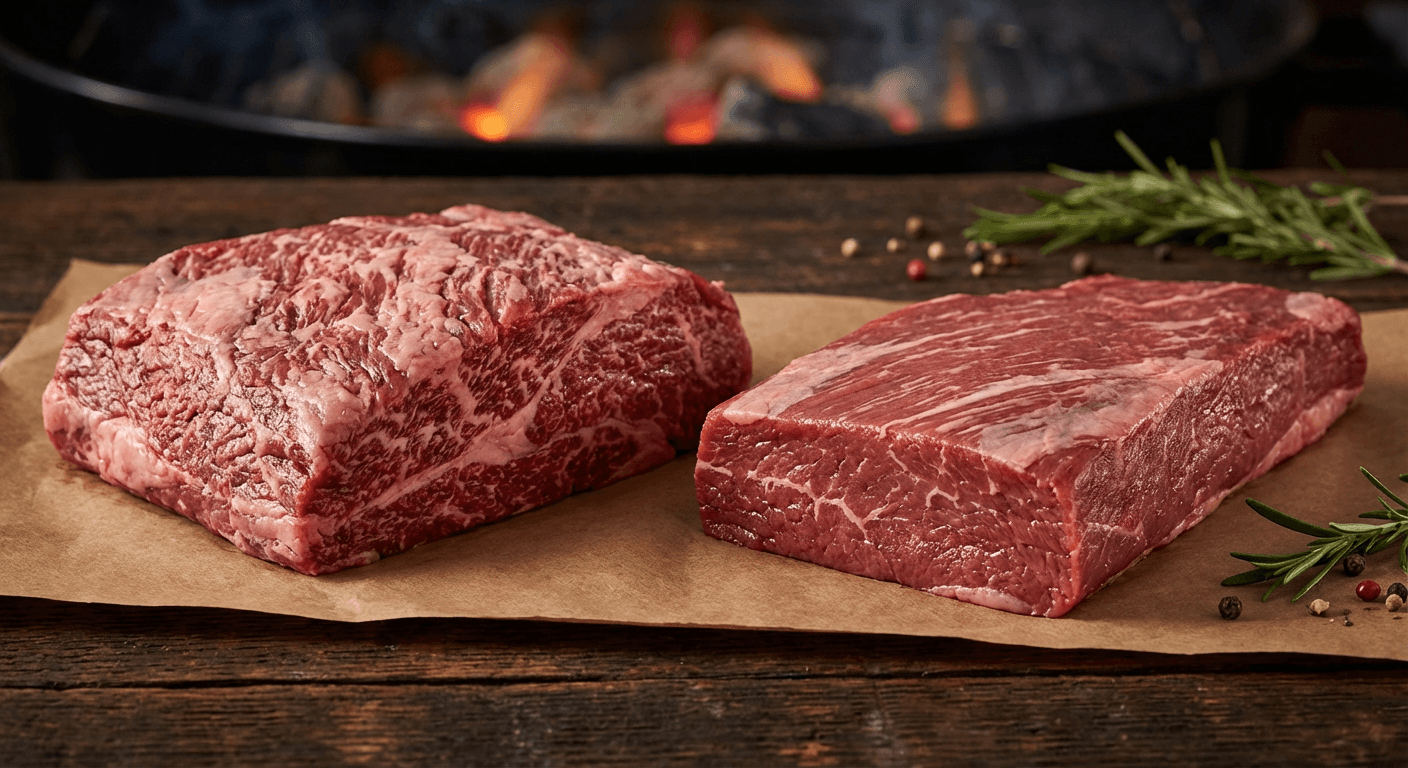
A brisket deckles into two very different personalities: the point is a buttery, marble-rich chunk that melts into unctuous ribbons when cooked, while the flat is denser, leaner and perfect for those wafer-thin deli slices. The point’s heavy intramuscular fat brings a silky mouthfeel and dramatic, glossy cross-sections; the flat’s tighter grain holds together for neat, even slices that showcase the classic pastrami profile.
Separating point and flat early is one of the smartest moves you can make: it evens out the cook, shortens total smoke time (for many home cooks that means you’ll finish in roughly eight hours instead of chasing a much longer, jointed brisket cook), and makes slicing and presentation far easier. Trim more aggressively than you would for a whole brisket smoke — because curing, steaming and slicing change how fat behaves in pastrami, excess cap and hard seams only add greasy pockets instead of flavor. Aim to pare the flat to a thin protective layer (about 1/8–1/4 inch) and remove silverskin, large flaps and thick islands of hard fat; on the point, trim away obvious exterior slabs but respect the internal marbling that gives it its luxurious texture. Save every trim: dice the fat into small pieces, render low and slow in a heavy pot or in a 250°F oven until the cracklings sink and the liquid fat turns clear, strain through cheesecloth, cool in jars and refrigerate. That homemade tallow is liquid gold for searing steaks, roasting potatoes, frying eggs, or seasoning cast-iron pans. Last practical notes: chill the pastrami until firm before slicing, always cut against the grain, and remember the point’s grain can shift — rotate the meat to find the best angle. Visually, the point reads richer and more decadent in photos, while the flat is the familiar, elegant deli slice everyone expects.
"Always slice pastrami against the grain — do it right and each bite melts like butter; do it wrong and you’ll be fighting every chew."