First‑Time Smoked Prime Rib — Nail Your Holiday Roast
Turn a simple prime rib into a restaurant‑quality centerpiece: slow smoking for deep, savory smoke, then a high‑heat finish for a crackling crust and rosy, tender center. Follow this step‑by‑step game plan to pull off a stress‑free Christmas roast for your small holiday party.
Why Smoked Prime Rib Is Perfect for a Small Holiday Party
Picture a cozy living room with a handful of friends, low lights and a small tree, and the centerpiece arriving hot from the smoker: a prime rib with a deep mahogany crust and the scent of rosemary, garlic and apple smoke weaving through the air. For a small Christmas or holiday gathering, prime rib hits the sweet spot — it looks spectacular on the table, slices into generous, buttery pieces, and because it’s a richly marbled, forgiving cut, it tolerates a little leeway on timing and temperature. A single 10–12 pound roast will feed a modest crowd comfortably and leave you with luxury leftovers for sandwiches or a celebratory next-day dinner.
Smoking a prime rib instead of using a conventional oven changes the whole rhythm of the meal. Low, steady smoke at roughly 230–250°F bathes the exterior in gentle heat so the inside stays pink and silky while the outside builds a flavor-forward crust and a delicate smoke ring. The smoke flavor tends to be subtle and concentrated on the surface, which means you get a wonderful bark and aromatics without masking the beef’s natural richness. Practically speaking, the smoker is a huge asset: it frees up your indoor oven for all the sides and desserts, lets you adopt a hands-off timeline, and gives you margin to rest the roast without burning other dishes.
If the idea feels daunting, don’t let it scare you off — a clear plan makes this very doable for a first-timer. Do a simple dry-brine with salt a day ahead, bring the roast to smoker temperature and use a reliable probe thermometer so you can pull at your target (many aim for about 118°F for medium-rare before resting). I like a short apple or fruitwood smoke, then a long rest wrapped in foil and towels in a cooler to carry over and relax the juices. Finish with a quick high-heat sear if you want extra char right before serving. With that timeline and a thermometer in hand, you’ll be able to enjoy the party while the smoker does the heavy lifting — and your friends will remember the smell and the first slice.
Choosing and Prepping the Roast: Size, Salt, and a Flavor-Packed Crust
For a small holiday gathering a 10–12 lb prime rib is a sweet spot: big enough to serve generous 1‑pound portions (plan about 1 lb per person if you want hearty servings and easy leftovers), but not so massive that it overwhelms your smoker or your prep schedule. Decide bone‑in or boneless based on your priorities — bone‑in gives richer flavor and a dramatic presentation, while boneless is easier to carve and fits better in tighter smoker racks. If you choose bone‑in, expect a slightly longer cook and fantastic depth of flavor; if you go boneless, consider tying the roast with butcher’s twine every 1½–2 inches to keep an even shape for uniform cooking and prettier slices later.
Start your flavor work early with a dry brine: liberally salt the exterior (about ½–¾ teaspoon kosher salt per pound is a reliable guideline), place the roast on a rack, and leave it uncovered in the refrigerator for 24–48 hours (this is the ideal window; about 18 hours is a minimal acceptable time but less optimal, and for very large roasts up to 72 hours is acceptable). The salt pulls moisture out, dissolves into the meat, and then is reabsorbed, seasoning deeply and drying the surface so the crust will brown beautifully. When you’re ready to dress the roast, pat it dry and spread a thin, even layer of a mayo‑and‑herb paste — mayonnaise is brilliant here because the oil and eggs encourage browning and help the herbs cling. Mix about ⅓–½ cup mayo for a 10–12 lb roast with minced garlic, chopped rosemary, thyme, and a generous grind of coarse black pepper; the paste should smell bright with herb oils and have a glossy, spreadable texture. Slather it over the fat cap and sides, press the herb bits into the surface, then let the roast sit while you bring the smoker up to temp — 30–60 minutes is plenty if you’ve already dry‑brined. That short rest lets the paste adhere so you end up with a deeply flavored, mahogany crust that smells of toasted garlic and piney rosemary the moment you cut into it.
Optional finishing tip: if the fat cap is uneven, lightly score it in a crosshatch so the mayo‑herb paste can penetrate the edges and the fat renders more evenly. Small, practical touches like tying and a well‑applied paste pay big dividends in a gorgeous slice and a crowd‑pleasing plate.
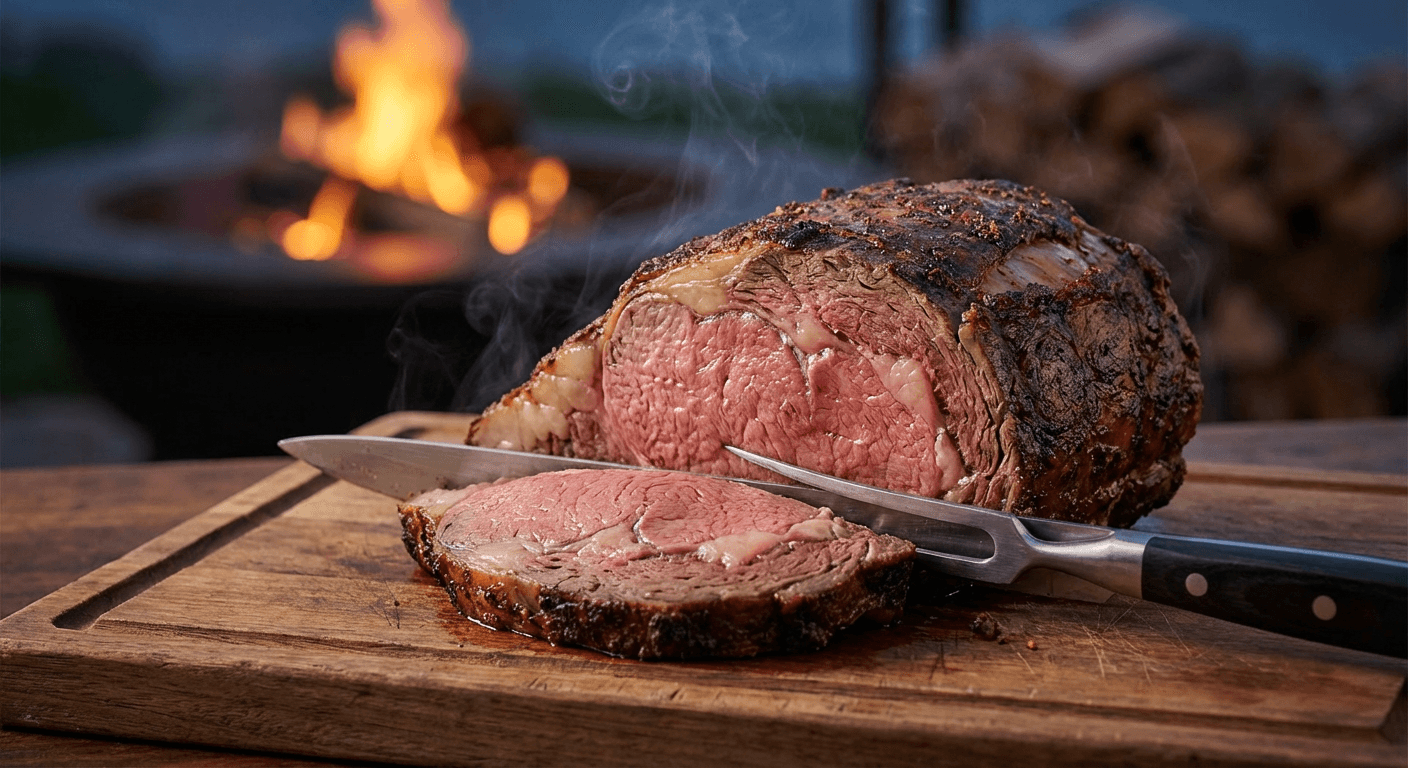
Smoked Prime Rib with High‑Heat Finish
A simple, fail‑safe plan for smoking an 11–12 lb prime rib low and slow, resting it in a cooler, then finishing with a blast of high heat for a crisp, caramelized crust and tender, juicy interior.
Ingredients
- Bone‑in prime rib roast11–12 lb
- Kosher salt (for dry brine)3–4 tbsp
- Mayonnaise (rub base)1/2 cup
- Garlic, minced4 cloves
- Fresh rosemary, chopped2 tbsp
- Fresh thyme, chopped2 tbsp
- Cracked black pepper2 tsp
- Olive oil1–2 tbsp
- Apple wood chunks4–6 chunks
- CharcoalEnough for 3–5 hours
- Leave‑in meat thermometer1
- Insulated cooler and towels (for resting)1 set
Steps
- 1
Pat the roast dry and rub all over with kosher salt, then refrigerate uncovered for at least 18–24 hours to dry‑brine.
- 2
About 1–2 hours before cooking combine mayonnaise, minced garlic, chopped rosemary, thyme, pepper and olive oil and smear evenly over the roast.
- 3
Remove the roast from the refrigerator 60–90 minutes before cooking to take the chill off and come toward room temperature.
- 4
Set up your smoker with charcoal and apple wood chunks and stabilize the cooking chamber to 230–250°F (110–120°C).
- 5
Insert a leave‑in probe into the center of the roast, avoiding bone, and connect it to a digital thermometer for continuous monitoring.
- 6
Place the roast fat‑side up on the smoker grate with the bone or fat cap oriented away from direct heat if you have a heat deflector.
- 7
Smoke the roast at 230–250°F until the internal temperature reaches 115–118°F (about 3–4 hours for an 11–12 lb roast).
- 8
Remove the roast from the smoker, tent loosely with foil, place in an insulated cooler wrapped in towels, and rest for 30–90 minutes (30–90 minutes is the common window for an insulated rest). Resting longer—up to 90–120 minutes—is acceptable with a well‑insulated cooler, but monitor the internal temperature to avoid unintended overcarry and pull earlier if the center approaches your target.
- 9
Preheat your pizza oven, grill, or very hot oven to a high searing temperature (700–900°F in a pizza oven or the hottest setting your equipment allows).
- 10
Finish the roast with a quick, high‑heat sear for 2–6 minutes total, rotating to develop an even, deeply browned crust while watching color closely.
- 11
Confirm the center reads about 125–130°F for medium‑rare after the sear and let the roast rest uncovered 10–15 minutes before slicing if needed.
- 12
Carve between the bones or slice thinly across the grain and serve with pan juices or a quick au jus made from drippings and beef stock.
A simple, fail‑safe plan for smoking an 11–12 lb prime rib low and slow, resting it in a cooler, then finishing with a blast of high heat for a crisp, caramelized crust and tender, juicy interior.
Ingredients
- Bone‑in prime rib roast11–12 lb
- Kosher salt (for dry brine)3–4 tbsp
- Mayonnaise (rub base)1/2 cup
- Garlic, minced4 cloves
- Fresh rosemary, chopped2 tbsp
- Fresh thyme, chopped2 tbsp
- Cracked black pepper2 tsp
- Olive oil1–2 tbsp
- Apple wood chunks4–6 chunks
- CharcoalEnough for 3–5 hours
- Leave‑in meat thermometer1
- Insulated cooler and towels (for resting)1 set
Steps
- 1
Pat the roast dry and rub all over with kosher salt, then refrigerate uncovered for at least 18–24 hours to dry‑brine.
- 2
About 1–2 hours before cooking combine mayonnaise, minced garlic, chopped rosemary, thyme, pepper and olive oil and smear evenly over the roast.
- 3
Remove the roast from the refrigerator 60–90 minutes before cooking to take the chill off and come toward room temperature.
- 4
Set up your smoker with charcoal and apple wood chunks and stabilize the cooking chamber to 230–250°F (110–120°C).
- 5
Insert a leave‑in probe into the center of the roast, avoiding bone, and connect it to a digital thermometer for continuous monitoring.
- 6
Place the roast fat‑side up on the smoker grate with the bone or fat cap oriented away from direct heat if you have a heat deflector.
- 7
Smoke the roast at 230–250°F until the internal temperature reaches 115–118°F (about 3–4 hours for an 11–12 lb roast).
- 8
Remove the roast from the smoker, tent loosely with foil, place in an insulated cooler wrapped in towels, and rest for 30–90 minutes (30–90 minutes is the common window for an insulated rest). Resting longer—up to 90–120 minutes—is acceptable with a well‑insulated cooler, but monitor the internal temperature to avoid unintended overcarry and pull earlier if the center approaches your target.
- 9
Preheat your pizza oven, grill, or very hot oven to a high searing temperature (700–900°F in a pizza oven or the hottest setting your equipment allows).
- 10
Finish the roast with a quick, high‑heat sear for 2–6 minutes total, rotating to develop an even, deeply browned crust while watching color closely.
- 11
Confirm the center reads about 125–130°F for medium‑rare after the sear and let the roast rest uncovered 10–15 minutes before slicing if needed.
- 12
Carve between the bones or slice thinly across the grain and serve with pan juices or a quick au jus made from drippings and beef stock.
Pro Tip
Pull the roast about 10°F below your desired serving temperature—large roasts and insulated rests can add 5–15°F of carryover—so for medium‑rare (125–130°F) remove at roughly 115–120°F. Rest loosely tented (or in a cooler with towels) 30–90 minutes and confirm doneness with an instant‑read probe in the thickest part before any final sear to avoid overcooking.
Frequently Asked Questions
Bringing It All Together: Confident Prime Rib on Your First Try
Keep the game plan simple and dependable: dry-brine the roast (ideally 24–48 hours ahead), smoke low-and-slow at 230–250°F until the internal temp reaches about 118–120°F, then tuck it into a long, insulated rest before a hot-and-fast finish. The dry brine seasons deep into the meat, the gentle smoke adds a soft wood perfume and color, and pulling a touch early preserves a silky, medium-rare center. The final blast of heat—whether a screaming-hot grill, a pizza oven, or a blistering cast-iron sear—creates that mahogany, peppery crust everyone loves.
A quick word of reassurance: small timing differences are normal and the long rest window is what makes this approach so forgiving. Resting the roast wrapped and insulated for an hour or two (even longer in a cooler with towels) evens out the temperature, lets juices redistribute, and gives you wiggle room to finish when guests arrive. Rely on an instant-read thermometer and the 118–120°F pull point rather than strict minutes on the smoker — focus on internal temp trends, not the clock.
Once you’ve run this basic method a time or two, have fun experimenting: swap apple for oak or hickory for a bolder smoke, try a mustard-and-herb rub with rosemary and thyme, or finish with compound butter for a glossy, savory sheen. Small tweaks—different woods, herb blends, or finishing techniques—let you make the roast your own without sacrificing reliability. Do this once and you’ll see how approachable and impressive smoked prime rib can be; it’s an easy way to start a delicious holiday tradition your friends and family will look forward to every year.