Still Frozen? Rescue Your Turkey Tonight
You’re not alone—and you’re not doomed. This guide gives safe, fast thawing methods, quick spatchcock tips for the smoker, and smart backup plans so dinner happens. Skip straight to the Thawing Steps below and get started right now.
Why Your Turkey Is Still Frozen (And What That Means for Smoking)
Big turkeys are stubborn because of simple math: in a refrigerator a safe rule of thumb is about 24 hours of thawing for every 4–5 pounds of bird. That means a 23‑pound turkey can easily need five or six days — sometimes longer if your fridge runs cold or the packaging traps cold air. So even when the outer skin and legs finally give a little, the deepest parts can still be locked in ice.
Thick, dense areas are the last to soften: the breast, the inner cavity around the neck and giblet packet, and any pockets where fat or bone slow heat transfer. That’s important for smoking — you don’t want to drop a rock‑solid bird into low-and-slow smoke because the outside will start to color and dry long before the interior reaches safe temperatures, which means uneven doneness and a longer time spent in the danger zone where bacteria multiply. Food‑safety basics matter here: keep the turkey at or below 40°F while thawing, never use warm water or countertop air to accelerate the process, and avoid letting any part linger between 40°F and 140°F.
If you’re a first‑time turkey smoker and panic is setting in, it’s usually salvageable if you still have several hours. The cold‑water method speeds things up — USDA guidance and practical cooks both point to roughly 30 minutes per pound in cold water — but you can shortcut the mission: unwrap the bird, pull out the neck and giblet bag (they’re often the cold anchors), then submerge the turkey in a leak‑proof bag and either run a steady trickle of cold water through the cavity or change the water every 20–30 minutes. Your realistic goal for tonight is simple and focused: get the cavity cleared and the breast and joints pliable enough to spatchcock, pat dry, and season. Once it’s flexible you can butterfly it, hit it with salt or a quick brine, and get it onto the smoker without risking an overcooked exterior or a frozen core.
Food Safety First
Never thaw a turkey at room temperature or in warm/hot water — that lets the surface enter the bacterial danger zone. If you must speed-thaw, keep the bird sealed and submerged in cold water changed every 30 minutes (about 30 minutes per pound), or skip thawing and cook from frozen, adding roughly 50% to the usual cooking time and ensuring the bird reaches safe internal temperatures.
Fast, Safe Thawing: From Icy Rock to Spatchcock-Ready
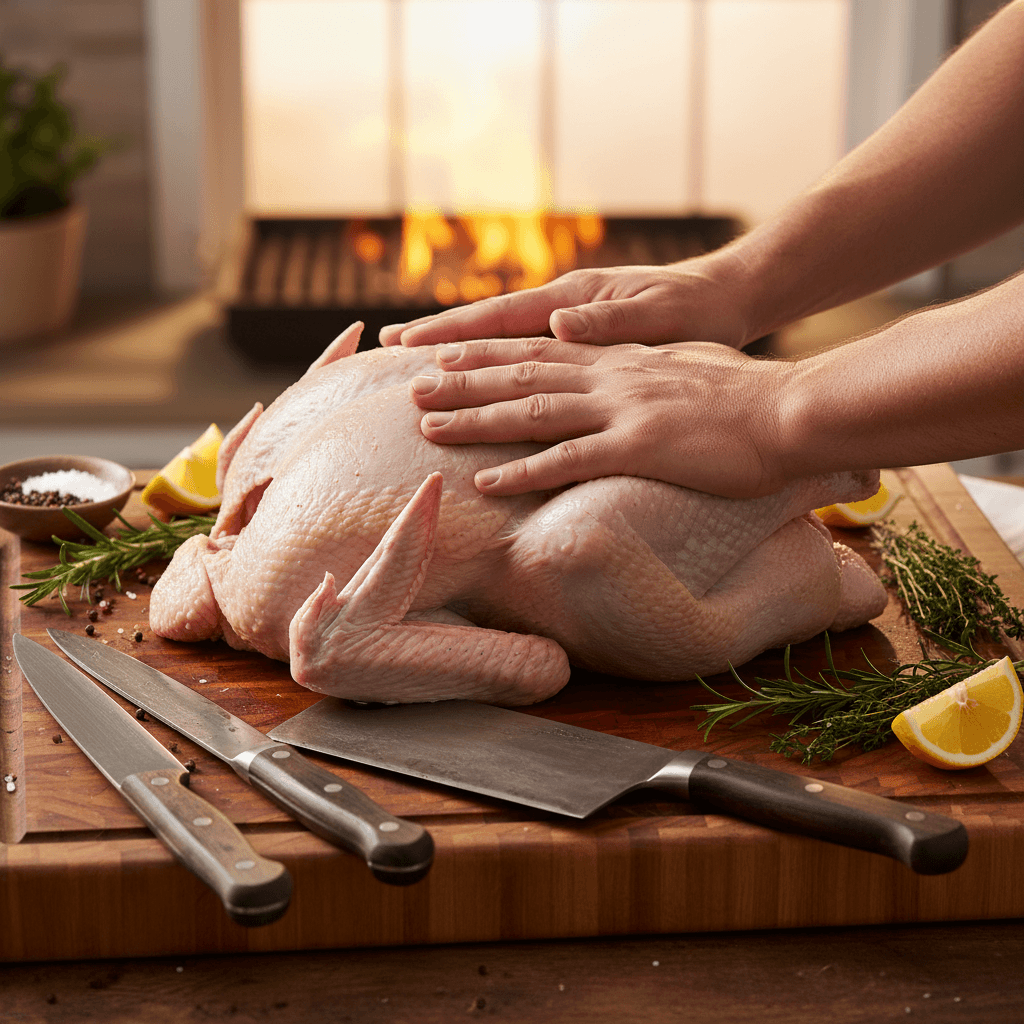
Step 1: Unwrap the turkey completely. Peel away the plastic, netting and any absorbent pads so cold water can touch the skin and cavity directly — leaving the packaging on is the single biggest slowdown. Step 2: Work over a clean sink or a large cooler so you can handle the bird without splashing your counter; open the main cavity and the neck cavity so water can move through. Step 3: As soon as the cavity softens, reach in and pull out the neck and giblet bag. If they’re stubborn, run cool water directly through the cavity or use a sink sprayer — a focused rinse will often free those pieces in a few minutes and speeds thawing by getting water into the hidden cold spots.
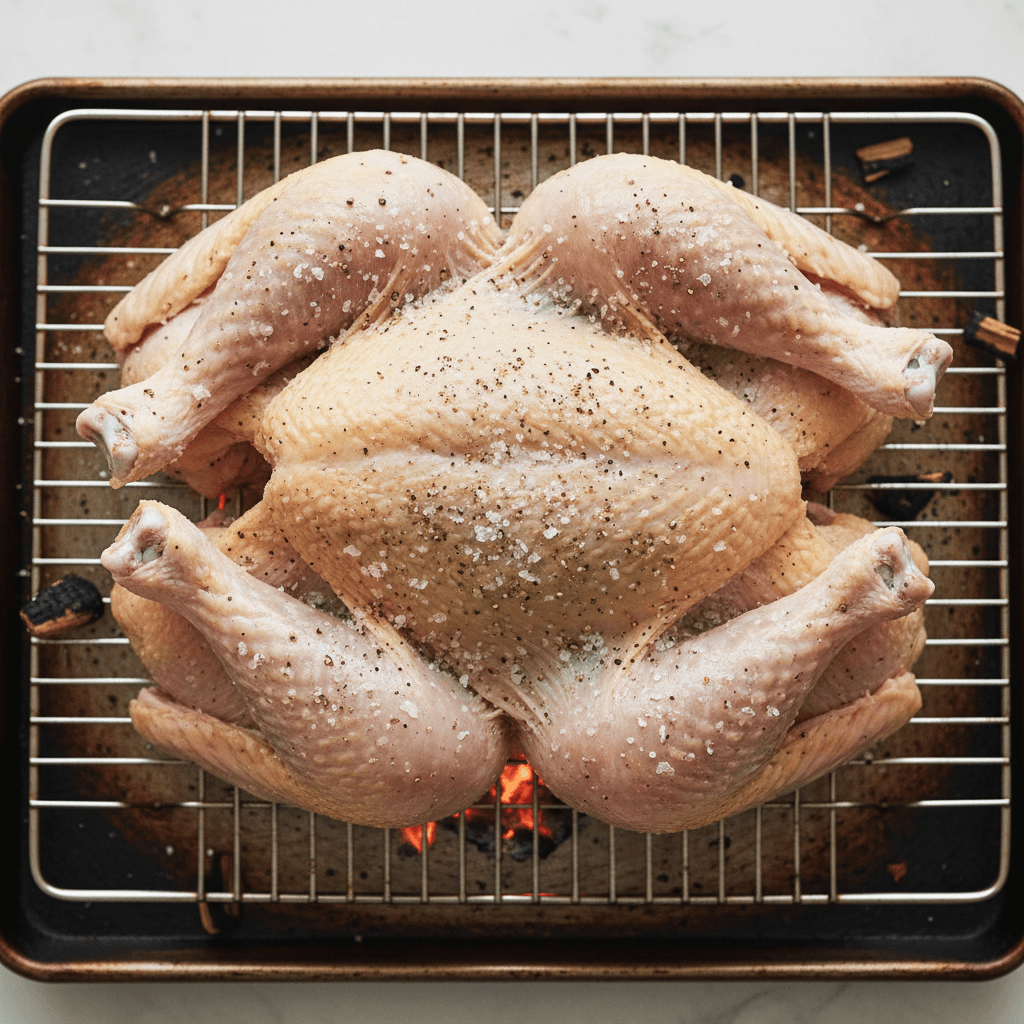
Cold-water bath method: fully submerge the turkey breast-side down in a clean sink or cooler of cold water, cover it, and change the water every 30 minutes. For a bird that’s rock hard, plan roughly 30 minutes per pound as a starting estimate; a partially thawed turkey will loosen far faster. If you have a big sink or cooler, the running-water variation — a small steady stream that keeps the water circulating and cold — can shave hours off the process. Keep the water cold (add ice or use very cold tap water), never use hot water, and monitor the outer meat so it never feels warm or mushy — the goal is to keep the bird below food-safety temperatures while thawing. You want the legs and backbone flexible and the deepest parts only slightly chilly; it’s fine if the center finishes thawing in the fridge overnight. Once pliable, cut out the backbone with poultry shears, press the bird flat to spatchcock it, then lay it skin-side up on a rack over a tray in the fridge to dry the skin. Lightly salt or dry-brine the exposed meat once it’s flattened to season and to draw out surface moisture — even 30–60 minutes will improve smoke penetration and help the skin crisp on the smoker.
Practical tips: if you’re changing water by hand, set a timer for 30 minutes; if you’re using a running stream, keep it gentle to conserve water and add ice packs if the stream runs warm. Use tongs or a long spoon to fish out the giblets if your hand can’t reach, and keep a probe thermometer handy to confirm the deepest meat stays below 40°F while thawing. Once spatchcocked and salted, give the bird at least a short rest in the fridge skin-side up so the surface can dry — that thin, taut skin is what turns golden and crackly when it meets hot smoke.
Frequently Asked Questions
When to Pivot—and How Not to Ruin the Holiday
If your bird still feels solid through the breast and you can’t easily remove the neck and giblet bag from the cavity, that’s a clear sign it won’t be safely ready in time. Another red flag is simple math: if you don’t have enough hours left for a full thaw plus the hours of low-and-slow smoking or roasting your plan requires, don’t gamble. Trying to cook an icy core will deliver overcooked exterior skin and an undercooked center — a texture nightmare and a food-safety risk. Accepting that early lets you pivot cleanly instead of salvaging a dud.
Pivot confidently. A smaller bird or pieces cook faster and still give you that golden, crackling skin and roast aroma that fills the house. Split or boneless turkey breasts, whole roasting chickens, or even a couple of large Cornish hens or bone-in pork shoulders (if you like the smoke flavor) get to safe temps in far less time. If you can salvage parts from your turkey — breasts or legs — roast or smoke them at a bit higher heat to get caramelized edges and smoky perfume in a fraction of the time. If time or tools are tight, switch to an easy, impressive alternate: a glazed ham, a roast beef, or a last-minute professional hot roast from a trusted shop or quality takeout; it’s better to have a great-tasting, fully cooked centerpiece than a risky experiment.
Remember: the people around your table are what matters, not the shape of the bird. The laughter, leftovers, and stories matter more than whether you finished your original plan. This hiccup becomes a valuable lesson — next year you’ll buy earlier, start thawing sooner, and be ready with a backup — and you’ll tell the story with a smile. Turn the fragrant, unexpected main into part of the memory; sometimes a smoky, perfectly browned chicken or a tender smoked breast becomes the star of the holiday.
Quick checklist for next time: buy the turkey earlier in the week; start fridge thawing 24 hours per 4–5 pounds; always unwrap and check the cavity at least a day before cooking to remove the neck and giblets; have an instant-read thermometer and a backup main (chicken, ham, or a trusted takeout option) ready. Small changes like those turn panic into preparation — and keep the holiday about family, flavor, and good company.