Sure I’ll Smoke the Turkey — Hot‑and‑Fast for an 18‑lb Bird
You’ve just been volunteered to smoke the turkey and your brain is already racing: will it finish on time, and more importantly, will it be dry? This guide is for the exact scenario — an 18‑pound bird, butter‑injected and dry‑rubbed, on a roughly 7.5‑hour cook — using a hot‑and‑fast approach to deliver golden, crackling skin, juice‑locked white meat, and a balanced kiss of smoke. Read on for the timing, target temps, moisture tricks, and smoke‑control tips that get you a better night’s sleep and a show‑stopping centerpiece.
Why Poultry Hates Low-and-Slow
Why Temperature Matters
Turkey is built differently than a pork shoulder or a beef brisket. Those cuts are full of intramuscular fat and tough collagen that reward long, slow cooking—the collagen breaks down into gelatin and the fat renders, turning a once-tough muscle into a silky bite. A whole turkey, by contrast, has very little marbling and far less collagen inside the breast and leg muscles; most of its fat lives under the skin, not inside the meat. Low-and-slow heat is exactly what pork shoulder needs, but for poultry it simply leaves lean meat sitting at a cooking temperature long enough to lose moisture.
That moisture loss is especially dramatic in white meat. Once a turkey breast climbs past the high‑130s°F, muscle fibers begin to squeeze out juices and the meat moves rapidly toward dryness as it approaches safe temperatures. The longer you spend in that window, the more liquid you lose; a four‑hour gentle smoke might sound appealing, but it’s actually extra time for the breast to dehydrate. Dark meat is more forgiving because it carries more fat and connective tissue, but the same principle applies: less internal fat means less protection against long cook times.
That’s why a 325–375°F chamber temp often makes better sense for a whole bird. Higher heat shortens the time the breast spends in the moisture‑loss zone, speeds cooking so juices stay inside, and delivers crisp, bronzed skin that crackles when you slice it. When I say "hot‑and‑fast in the smoker," think of the smoker as a roasting oven with smoke layered on top—not a barbecue ritual of all‑day, low fire and deep smoke penetration. Expect most smoke flavor to sit in the skin and the outer surface of the meat; injection, butter under the skin, and a bold dry rub are your friends for getting flavor deep enough without over-smoking. Practical touches: preheat the smoker to the target range, use a reliable probe in the thickest part of the breast, and let the bird rest briefly so residual heat evens out and the juices redistribute.
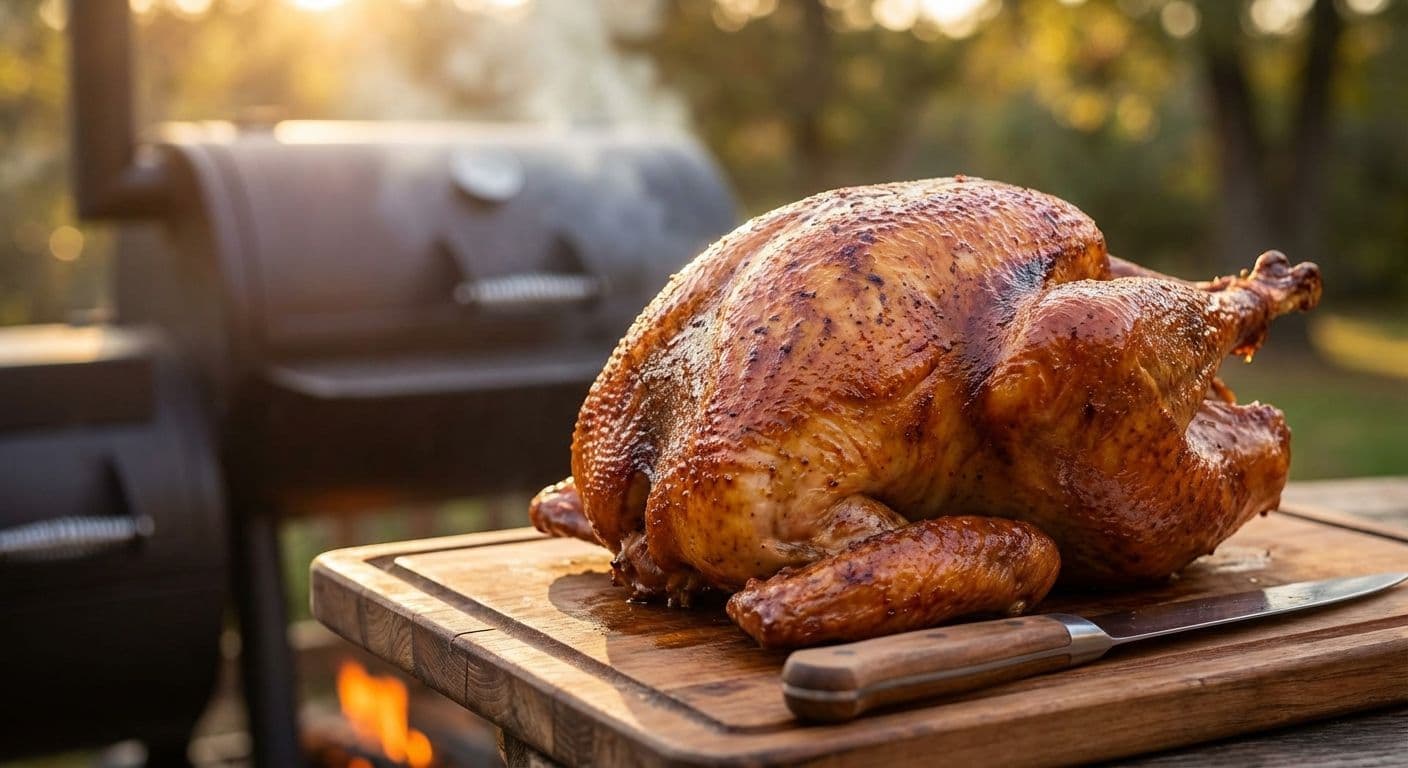
Hot-and-Fast Smoked 18‑Pound Butter‑Injected Turkey
An 18‑pound turkey injected with a savory butter blend and rubbed with a bold dry rub, smoked at higher temps for a reliably juicy, crisp‑skinned centerpiece in about 6–8 hours.
Ingredients
- Whole turkey, thawed18 lb
- Unsalted butter, melted1 cup (2 sticks)
- Low‑sodium chicken stock1/2 cup
- Fresh lemon juice1 tbsp
- Kosher salt (for injection)2 tsp
- Black pepper (for injection)1 tsp
- Garlic powder (for injection)1 tsp
- Kosher salt (for dry rub)2 tbsp
- Light brown sugar2 tbsp
- Smoked paprika2 tbsp
- Garlic powder (rub)1 tbsp
- Onion powder1 tbsp
- Black pepper (rub)1 tbsp
- Dried thyme1 tsp
- Dried sage1 tsp
- Cayenne pepper (optional)1/2 tsp
- Olive oil or neutral oil2 tbsp
- Apple juice or apple cider (for spritzing)1 cup
- Mild smoking wood chunks (apple or cherry)2–4 chunks
- Kitchen twine (optional)as needed
- Injection syringe1
Steps
- 1
Thaw the 18‑pound turkey completely in the refrigerator and remove the neck and giblets from the cavity.
- 2
Pat the turkey thoroughly dry inside and out with paper towels.
- 3
Loosen the skin from the breast and thighs by inserting your fingers between skin and meat to create pockets for injection.
- 4
Make the injection by whisking 1 cup melted unsalted butter with 1/2 cup low‑sodium chicken stock, 2 tsp kosher salt, 1 tsp black pepper, 1 tsp garlic powder, and 1 tbsp lemon juice until combined.
- 5
Fill an injection syringe and distribute the butter mixture into the breast and thigh meat, injecting about 3/4–1 tablespoon per site across 6–8 spots per breast and 4–6 spots per thigh. This recipe makes roughly 1.5 cups (about 24 tablespoons) of injection; if you prefer a heavier injection or to follow the higher per‑site amounts, double the injection ingredients.
- 6
Pat the skin dry again after injecting to remove any excess moisture.
- 7
Mix the dry rub in a bowl by combining 2 tbsp kosher salt, 2 tbsp light brown sugar, 2 tbsp smoked paprika, 1 tbsp garlic powder, 1 tbsp onion powder, 1 tbsp black pepper, 1 tsp dried thyme, 1 tsp dried sage, and 1/2 tsp cayenne if using.
- 8
Brush the turkey skin lightly with 2 tbsp olive oil to help the rub adhere.
- 9
Apply the dry rub liberally all over the exterior and inside the cavity, pressing it into the skin and openings.
- 10
Tuck the wing tips under the bird and truss the legs with kitchen twine if desired for even cooking.
- 11
Refrigerate the rubbed turkey uncovered for at least 1 hour or up to overnight to let the rub set and the skin dry for better crisping.
- 12
Preheat your smoker to a steady 325–350°F using indirect heat and add 2–4 chunks of apple or cherry wood for a mild fruitwood smoke.
- 13
Place the turkey breast‑side up on the smoker rack and insert a leave‑in probe into the thickest part of the breast and, if possible, a second probe into the thigh without touching bone.
- 14
Smoke the turkey at 325–350°F for approximately 6–8 hours, checking smoker temperature every 30–45 minutes and maintaining consistent heat. Remember that total time can vary by bird and smoker—final internal temperatures, not time, determine doneness, so monitor probe temps rather than relying solely on the clock.
- 15
Spritz the turkey with apple juice or cider every 60–90 minutes to help the skin develop an even color and to keep the breast moist.
- 16
If the skin needs extra crisping in the final 30–45 minutes, raise the smoker temperature to 375–400°F or move the bird to a hotter zone for short bursts to develop a deep golden crust.
- 17
Remove the turkey when the thickest part of the breast reads 158–160°F and the thickest part of the thigh reads 170–175°F. If you pull the breast slightly under 165°F, tent and rest the bird for 30–45 minutes so the breast carries over to 165°F before carving; the thigh target of 170–175°F yields the traditional tender thigh texture (note: USDA minimum is 165°F for all poultry and the final temperature must reach that level before serving).
- 18
Tent the turkey loosely with foil and rest for 30–45 minutes so carryover heat finishes the breast to 165°F and the juices redistribute.
- 19
Carve the turkey using a sharp knife and serve immediately with pan drippings or gravy made from reserved juices.
An 18‑pound turkey injected with a savory butter blend and rubbed with a bold dry rub, smoked at higher temps for a reliably juicy, crisp‑skinned centerpiece in about 6–8 hours.
Ingredients
- Whole turkey, thawed18 lb
- Unsalted butter, melted1 cup (2 sticks)
- Low‑sodium chicken stock1/2 cup
- Fresh lemon juice1 tbsp
- Kosher salt (for injection)2 tsp
- Black pepper (for injection)1 tsp
- Garlic powder (for injection)1 tsp
- Kosher salt (for dry rub)2 tbsp
- Light brown sugar2 tbsp
- Smoked paprika2 tbsp
- Garlic powder (rub)1 tbsp
- Onion powder1 tbsp
- Black pepper (rub)1 tbsp
- Dried thyme1 tsp
- Dried sage1 tsp
- Cayenne pepper (optional)1/2 tsp
- Olive oil or neutral oil2 tbsp
- Apple juice or apple cider (for spritzing)1 cup
- Mild smoking wood chunks (apple or cherry)2–4 chunks
- Kitchen twine (optional)as needed
- Injection syringe1
Steps
- 1
Thaw the 18‑pound turkey completely in the refrigerator and remove the neck and giblets from the cavity.
- 2
Pat the turkey thoroughly dry inside and out with paper towels.
- 3
Loosen the skin from the breast and thighs by inserting your fingers between skin and meat to create pockets for injection.
- 4
Make the injection by whisking 1 cup melted unsalted butter with 1/2 cup low‑sodium chicken stock, 2 tsp kosher salt, 1 tsp black pepper, 1 tsp garlic powder, and 1 tbsp lemon juice until combined.
- 5
Fill an injection syringe and distribute the butter mixture into the breast and thigh meat, injecting about 3/4–1 tablespoon per site across 6–8 spots per breast and 4–6 spots per thigh. This recipe makes roughly 1.5 cups (about 24 tablespoons) of injection; if you prefer a heavier injection or to follow the higher per‑site amounts, double the injection ingredients.
- 6
Pat the skin dry again after injecting to remove any excess moisture.
- 7
Mix the dry rub in a bowl by combining 2 tbsp kosher salt, 2 tbsp light brown sugar, 2 tbsp smoked paprika, 1 tbsp garlic powder, 1 tbsp onion powder, 1 tbsp black pepper, 1 tsp dried thyme, 1 tsp dried sage, and 1/2 tsp cayenne if using.
- 8
Brush the turkey skin lightly with 2 tbsp olive oil to help the rub adhere.
- 9
Apply the dry rub liberally all over the exterior and inside the cavity, pressing it into the skin and openings.
- 10
Tuck the wing tips under the bird and truss the legs with kitchen twine if desired for even cooking.
- 11
Refrigerate the rubbed turkey uncovered for at least 1 hour or up to overnight to let the rub set and the skin dry for better crisping.
- 12
Preheat your smoker to a steady 325–350°F using indirect heat and add 2–4 chunks of apple or cherry wood for a mild fruitwood smoke.
- 13
Place the turkey breast‑side up on the smoker rack and insert a leave‑in probe into the thickest part of the breast and, if possible, a second probe into the thigh without touching bone.
- 14
Smoke the turkey at 325–350°F for approximately 6–8 hours, checking smoker temperature every 30–45 minutes and maintaining consistent heat. Remember that total time can vary by bird and smoker—final internal temperatures, not time, determine doneness, so monitor probe temps rather than relying solely on the clock.
- 15
Spritz the turkey with apple juice or cider every 60–90 minutes to help the skin develop an even color and to keep the breast moist.
- 16
If the skin needs extra crisping in the final 30–45 minutes, raise the smoker temperature to 375–400°F or move the bird to a hotter zone for short bursts to develop a deep golden crust.
- 17
Remove the turkey when the thickest part of the breast reads 158–160°F and the thickest part of the thigh reads 170–175°F. If you pull the breast slightly under 165°F, tent and rest the bird for 30–45 minutes so the breast carries over to 165°F before carving; the thigh target of 170–175°F yields the traditional tender thigh texture (note: USDA minimum is 165°F for all poultry and the final temperature must reach that level before serving).
- 18
Tent the turkey loosely with foil and rest for 30–45 minutes so carryover heat finishes the breast to 165°F and the juices redistribute.
- 19
Carve the turkey using a sharp knife and serve immediately with pan drippings or gravy made from reserved juices.
Trust the Thermometer
Use a fast, reliable instant‑read thermometer and check both the thickest part of the breast and the inner thigh; pull the breast at 158–160°F and the thigh at 170–175°F and let 5–10°F of carryover finish while the bird rests. Don’t chase a set cook time—an 18‑pound turkey’s rate of rise varies, so always cook to temperature, not the clock.
Managing the Early Morning Grind (Without Hating Turkey Forever)
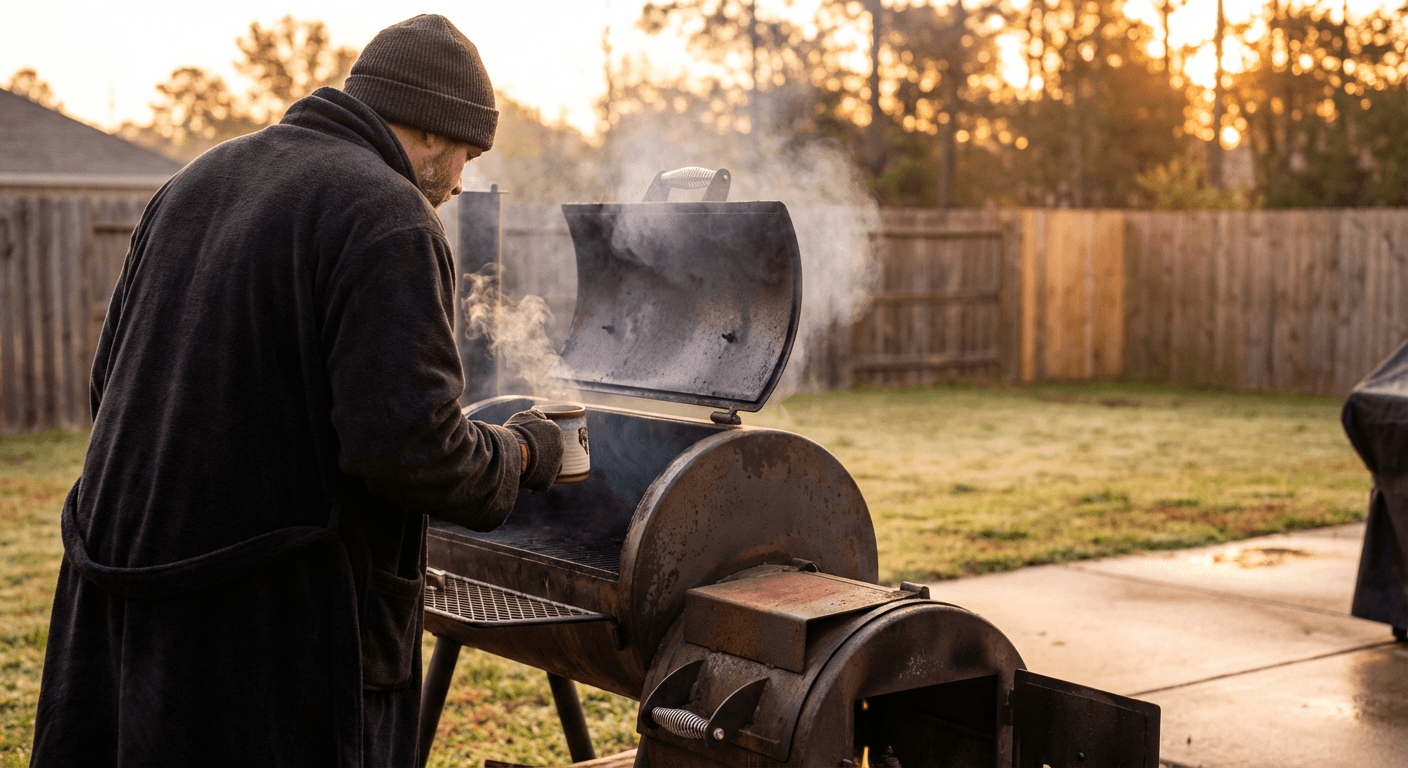
Plan backwards from dinner time and you’ll avoid a lot of panic. For a 3:00 p.m. dinner with an 18‑pound bird following a hot‑and‑fast approach (roughly 7–8 hours on the smoker), here’s a simple timeline you can copy: the night before — inject, dry‑rub, and loosely truss the turkey, then refrigerate uncovered for drier skin; 6:00–6:30 a.m. — light the smoker and stabilize at 325–350°F (it takes time to settle); 7:00–7:30 a.m. — put the bird on; check probes and confirm steady smoke and temp; 12:30–1:30 p.m. — start watching for final temps (aim to pull the breast around 160°F so carry‑over takes it to 165° while resting, and the thighs to 175–180°F); 1:30–2:00 p.m. — pull, tent loosely, and rest for 30–60 minutes before carving. That gives you a comfortable buffer for glaze, last‑minute sides, or a smoke flare‑up without demanding a 3 a.m. wakeup.
If the idea of an ugly‑early start makes you want to run for the casserole, you’ve got options: crank the pit a bit higher (350–375°F) for a faster cook, spatchcock the bird to shave hours off the clock (butterfly it and you’ll roast in roughly 3–4 hours at higher heat), or do all the fiddly prep the night before so morning is lightweight. Comfort items make the hours pleasant — layer clothing (wool base, insulated jacket, a hat that covers your ears), bring a thermos of strong coffee (or coffee with a friendly splash of whiskey if family tradition allows), and set both phone alarms and a wireless dual‑probe thermometer with high/low alerts so you aren’t glued to the smoker. To avoid becoming the family’s permanent pitmaster, set boundaries up front: offer to run the smoker this year in exchange for someone else owning sides or cleanup, recruit an apprentice and share the checklist, or make your availability part of the deal (“I’ll do it every other year”). And if you secretly love the ritual, lean in — make a playlist, build a simple turkey kit with notes and favorite wood chunks, and enjoy the quiet pride of serving the best bird on the table.
Frequently Asked Questions
Relax—You’ve Got This Bird
Take a breath — this is supposed to be fun, not an all‑nighter. With a hotter pit, a reliable probe thermometer, and a simple plan, you can skip the pre‑dawn wakeup and still bring a showstopper to the table: skin that’s deep mahogany and crisp, flesh that gives way to a butter‑rich, herb‑kissed steam, and meat that’s juicy from breast to thigh.
Quick recap: run the pit in the 325–375°F range for the hot‑and‑fast approach (an 18‑pound bird is commonly done in roughly seven to eight hours), inject butter or herb butter into the breast, lay on a flavorful dry rub for the skin, and let a probe thermometer tell the truth. Aim for about 160°F in the thickest part of the breast and 175–180°F in the thigh, knowing that carryover during a 20–30 minute tented rest will bring the breast to a safe 165°F and finish the dark meat tender.
Finally, make this method your own — adapt timing and placement to your smoker, oven, or grill, keep the three core principles (heat, thermometer, rest), and honor your family’s traditions. The result is a low‑drama turkey that tastes like you worked for it, without sacrificing sleep or sanity.