The Smoked Gouda Experiment: Can a Little Air Change Everything?
I smoked two identical blocks of Gouda a month ago, then ran a blind taste test that produced surprisingly clear results. One block went straight into a vacuum bag within minutes; the other rested wrapped in parchment for 24 hours before sealing. Which tasted better — intensely smoky and sealed, or mellowed and aired — and does that resting step actually matter? Read on for a practical, repeatable experiment you can try at home and simple takeaways that will change how you finish your next batch of cold‑smoked cheese.
The Setup: Two Identical Blocks of Gouda, One Simple Variable
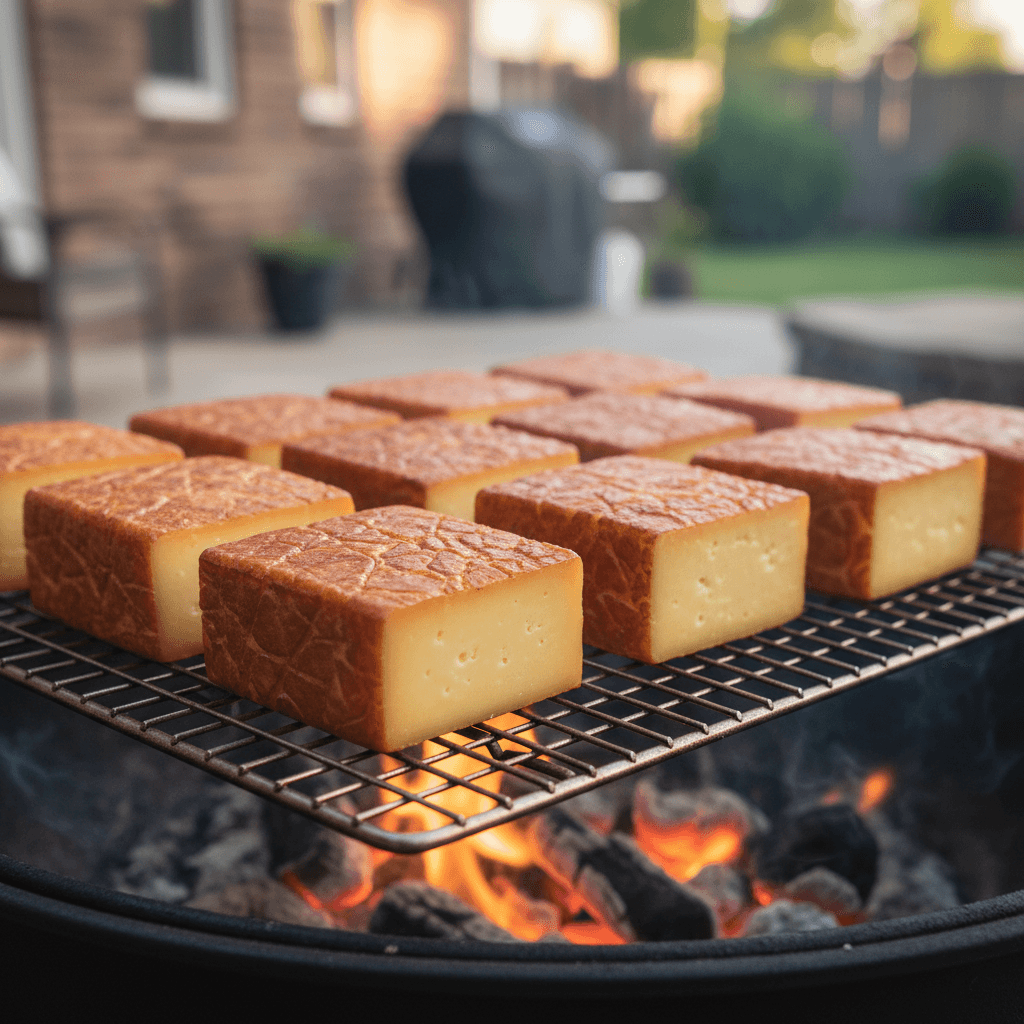
I cold-smoked a big batch of Gouda with gifting in mind — more than a hundred blocks over the season — so consistency mattered. The cheese comes off the smoker with a glossy, amber rind and a warm, nutty interior that smells like toasted pecans and maple smoke; I wanted every recipient to get that same balanced, mellow smoke instead of anything acrid or one-note. That concern is exactly why so many home cheesemakers and smokers advise letting smoked cheese “breathe” in butcher or parchment paper for a day before vacuum-sealing: the idea is that a short rest lets volatile, sharp smoke compounds mellow and prevents them from getting trapped and concentrated in an airtight bag.
To test that advice I set up a simple, side-by-side experiment where everything was identical except the resting step. Same cheese (Gouda), same smoker and rack placement, the same fruitwood pellets (an apple–cherry blend), the same smoke time and temperature (cold-smoked at about 80–90°F / 27–32°C for four hours) — the two blocks literally sat next to one another on the wire. When they came off the smoker I treated them differently: Block A went into a chamber vacuum sealer within about 10–15 minutes of cooling and was sealed immediately; Block B was wrapped in a single layer of parchment paper and refrigerated to rest for 24 hours, then vacuum sealed. This isolates the variable people always talk about — immediate sealing versus a day to breathe.
Both blocks were stored under the same refrigerated conditions and handled on the same schedule after sealing; no extra marinades, no different temperatures, no extra smoke — just the single change in handling. This isn’t a controlled lab study with instrumentation, it’s a practical backyard test designed to reflect what a home smoker will actually do, but it was run with attention to detail so the results carry real-world relevance. If you want to replicate this at home: smoke two identical pieces, label them, place them side-by-side, and only change the resting step — that’s all you need to learn whether the old breathing rule holds up in your kitchen.
The Taste Test: What 16 People Agreed On
I set up a blind tasting with sixteen coworkers to strip expectation out of the equation. Each sample came from the same smoked Gouda run, was handled identically, and was labeled only as “A” and “B” so nobody knew which had been wrapped in parchment for 24 hours and which had been vacuum-sealed immediately. We tasted on neutral crackers and rinsed between samples so judgments focused on aroma and flavor, not texture or appearance.
The outcome was striking and very consistent: every single taster pointed to the parchment-rested block as the smokier cheese. Even more convincing, 14 out of 16 people said they preferred the rested cheese overall; two preferred the milder, just-sealed block. Descriptors for the rested wedge kept circling back to “deeper” and “richer” — layered maple-char, rounded caramel notes and a long, savory smoke finish — while the immediately sealed block came across as subtler and cleaner, with a gentler, almost lactic smoke character.
That unanimity is surprising because it runs against the common assumption that sealing traps and concentrates smoke. In this experiment, letting the cheese “breathe” in parchment actually increased the perceived smoke intensity and complexity. Practical takeaway: if you want a bolder, more layered smoked Gouda, give it a day wrapped in breathable paper before sealing; if you prefer a lighter, cleaner smoke, seal right away. Personal preference still matters — the two dissenters favored that milder profile — so try both to see which direction your palate prefers.
Tune smoke intensity
In our test, the wedge that rested in parchment before vacuum-sealing was consistently perceived as smokier and more complex than the immediately-sealed block. That means, for this experiment, letting a smoked Gouda "breathe" in parchment for 24–48 hours intensified the smoke impression rather than mellowing it. If you like a pronounced smoke, start with 24 hours; 48–72 hours tended to add more complexity and depth. Home results can vary based on cheese size, surface moisture, smoke strength, humidity and the wrapping material, so try small trials to find the rest time that suits your taste.
Why Might Resting in Paper Make Cheese Taste Smokier?
There’s no single, settled answer — the chemistry of smoke and cheese is layered and a bit messy — but a few plausible forces probably combine to make a paper-rested wheel read as “smokier” on the palate. Think of smoke compounds as volatile, aromatic molecules that like to travel, concentrate, and shift as moisture and temperature change. Small differences in surface moisture, air movement and what the cheese is sitting in for the next 24–72 hours can nudge those compounds into different places and change how bold or mellow the finished bite feels.
Hypothesis 1 — surface drying and flavor concentration: wrapping a smoked gouda in parchment or butcher paper for a day lets a paper-thin layer of moisture evaporate from the rind. That slight drying concentrates smoke oils and carbonyls right where you first taste the cheese, so the initial hit is richer and punchier — think a bright, smoky crust that gives way to the nutty, creamy core. Practical tip: if you want that first bite to shout smoke, give the cheese 24–48 hours in breathable paper before long-term storage; avoid leaving it unwrapped at room temperature for too long to prevent an overly tacky rind.
Hypothesis 2 — how vacuum bags behave and Hypothesis 3 — internal migration: vacuum sealing removes air quickly, and with it some of the most volatile aromatics, while the plastic can also absorb and diffuse smoke compounds over time, subtly muting the top-note intensity. By contrast, breathable paper keeps those aromas close to the cheese while moisture redistributes, letting the smoke linger at the surface. At the same time, as the cheese cools and rests, smoke compounds will continue a slow inward migration that smooths harsher, acrid edges and builds a rounded, evenly smoked character inside the paste. Some pitmasters skip the paper to save time or fridge space, and that’s a reasonable tradeoff — but this experiment suggests they may be sacrificing a bit of that punchy, surface-forward smoke. Treat these as working theories: try different rest times and wrapping methods and note how the aroma and bite change — your own kitchen is the best lab.