Smoked Thanksgiving Duck: Dark, Crispy, and Unapologetically Bold
Swap or supplement the turkey with a pecan‑smoked duck glazed in maple sugar and habanero honey, rubbed with smoked kosher salt and a cayenne kick, and cavity‑filled with roasted garlic and blood orange for brightness. Expect heady pecan smoke, sweet‑heat caramelized on the skin, and a glossy, almost‑black crust that isn’t burnt but perfectly rendered and crisp — a showstopping centerpiece for adventurous pitmasters and hosts who want to truly impress.
Why Duck Belongs on Your Thanksgiving Table
If you want a holiday centerpiece that feels a little more luxurious than turkey, duck is your secret weapon. Its meat is richer and more intensely flavored, with enough natural fat to keep the breast and legs succulent during a long smoke. Unlike turkey, duck’s dark meat and generous fat layer make it surprisingly forgiving on the smoker — you can coax deep smoky complexity without drying things out, which is why many cooks reach for duck when they want bold flavor and stress-free results.
Duck’s bounty of fat and dark meat is also why it pairs so beautifully with sweet-heat flavors like maple glaze, cayenne spice and a hit of habanero honey. The sugar caramelizes on the skin and, combined with smoke, develops a lacquered, deeply browned crust that can darken to nearly black — don’t panic, that’s often ideal and packed with toasty, bittersweet flavor. Use medium-smoking pecan wood for the cook: it delivers a nutty, sweet smoke that flatters poultry without overpowering the maple and chile notes. Practical tip: score the breast skin lightly so the fat renders cleanly and you get a crisper finish.
Think about how you’ll serve it: a whole smoked duck makes a stunning main for a smaller, intimate Thanksgiving, or it can sit alongside a turkey and a rack of ribs for a more adventurous spread. Slice the breast thin against the grain, pull the leg meat for rustic platters, and offer a bright accompaniment — orange segments, a tangy pan sauce, or a drizzle of the maple-chile glaze cut through the richness. Save the rendered fat for roasting potatoes or braising vegetables; it’s one of those practical bonuses that elevates everything on the table.
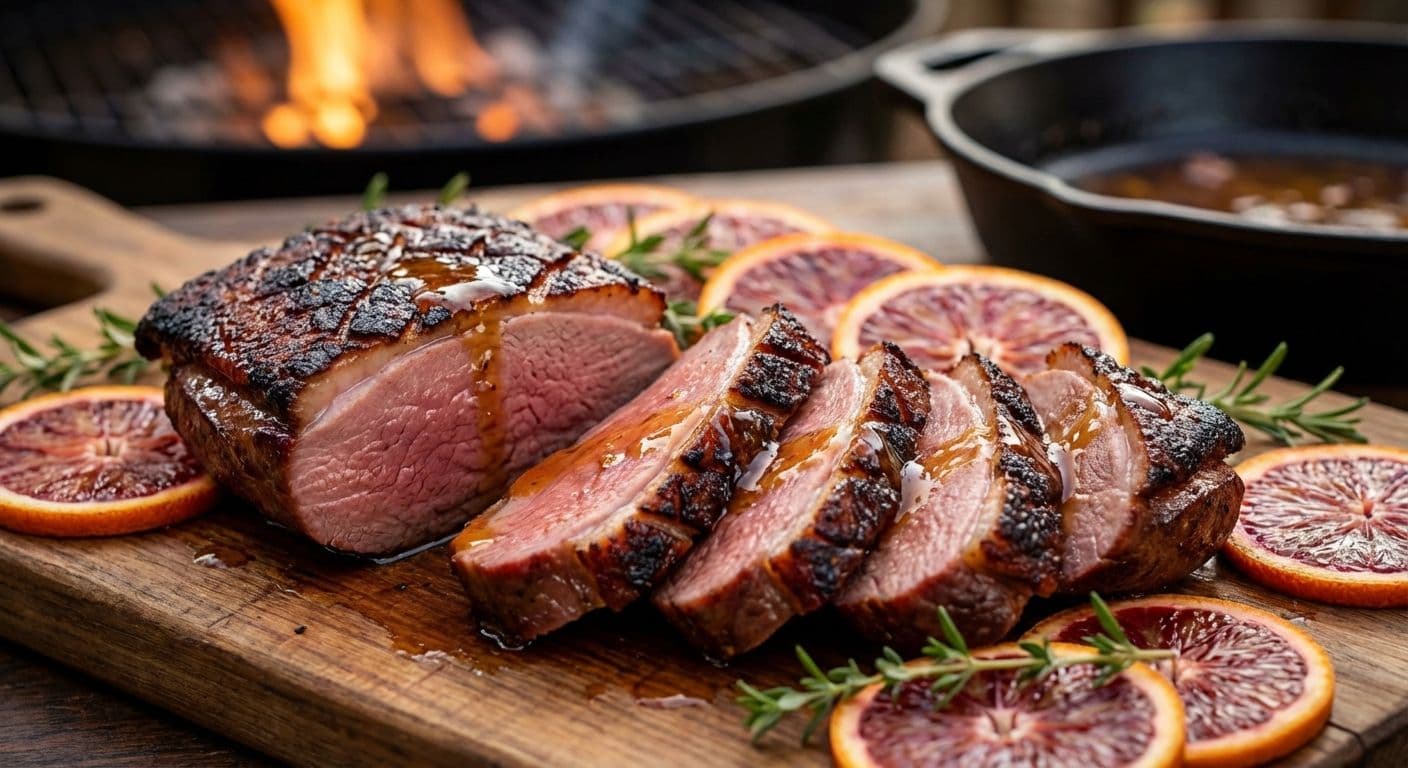
Smoked Thanksgiving Duck with Maple-Chile Crust and Pecan Wood
Whole duck smoked over pecan wood with a maple-chile crust, roasted garlic and blood orange stuffing, and a sticky habanero-honey glaze for a sweet, smoky, and bright Thanksgiving centerpiece.
Ingredients
- Whole duck1 (5–6 lb)
- Maple sugar2 tablespoons
- Smoked kosher salt1 tablespoon plus 1 teaspoon for the cavity
- Cayenne pepper (30–50K SHU)3/4 teaspoon
- Habanero honey3 tablespoons
- Roasted garlic1 head, roasted and smashed
- Blood oranges3 (2 halved for the cavity, 1 juiced for glaze)
- Freshly ground black pepper1 teaspoon
- Olive oil1 tablespoon
- Pecan wood chips or chunks2 cups chips or 6–8 chunks
- Chicken stock or water1/2 cup (for pan jus)
- Rendered duck fat (optional to save)as produced by roasting
Steps
- 1
Preheat your smoker to 275°F (135°C) and load it with pecan wood chips or chunks.
- 2
Remove the giblets, trim any loose fat, and pat the duck dry inside and out with paper towels.
- 3
Score the skin in a shallow crosshatch without cutting into the meat to help the fat render.
- 4
Season the cavity with 1 teaspoon smoked kosher salt and a pinch of black pepper.
- 5
Combine maple sugar, the remaining smoked kosher salt, cayenne, and black pepper to make the maple-chile rub.
- 6
Brush the duck lightly with olive oil to help the rub adhere.
- 7
Apply the maple-chile rub evenly over the skin, working it into the scored cuts.
- 8
Stuff the cavity with the roasted garlic head and two halved blood oranges, reserve one orange for the glaze, then truss the duck.
- 9
Place the duck breast-side up on the smoker rack over a drip pan and insert a probe thermometer into the thickest part of the thigh.
- 10
Smoke the duck for about 2 to 2.5 hours until the thigh reaches 155–160°F (68–71°C) and much of the fat has rendered.
- 11
About 10–20 minutes before the target temp, whisk together habanero honey, the juice of the reserved blood orange, and 1 teaspoon maple sugar to make a glaze. Brush the glaze over the duck during the final 10–20 minutes at the higher heat—sugars can burn if applied too early.
- 12
Increase the smoker temperature to 375°F (190°C) or move the duck to a hotter zone and continue cooking until the internal temperature reaches 165°F (74°C) and the skin crisps.
- 13
Transfer the duck to a cutting board, tent loosely with foil, and rest for 15–20 minutes.
- 14
Meanwhile, pour the smoker drippings into a saucepan, add the roasted garlic cloves, remaining blood orange juice and a tablespoon of habanero honey with 1/2 cup chicken stock, then simmer and reduce to a spoonable jus.
- 15
Carve the duck and spoon the blood orange-honey jus over the breast and thighs before serving.
- 16
Strain and save the rendered duck fat for roasting vegetables or future use.
Whole duck smoked over pecan wood with a maple-chile crust, roasted garlic and blood orange stuffing, and a sticky habanero-honey glaze for a sweet, smoky, and bright Thanksgiving centerpiece.
Ingredients
- Whole duck1 (5–6 lb)
- Maple sugar2 tablespoons
- Smoked kosher salt1 tablespoon plus 1 teaspoon for the cavity
- Cayenne pepper (30–50K SHU)3/4 teaspoon
- Habanero honey3 tablespoons
- Roasted garlic1 head, roasted and smashed
- Blood oranges3 (2 halved for the cavity, 1 juiced for glaze)
- Freshly ground black pepper1 teaspoon
- Olive oil1 tablespoon
- Pecan wood chips or chunks2 cups chips or 6–8 chunks
- Chicken stock or water1/2 cup (for pan jus)
- Rendered duck fat (optional to save)as produced by roasting
Steps
- 1
Preheat your smoker to 275°F (135°C) and load it with pecan wood chips or chunks.
- 2
Remove the giblets, trim any loose fat, and pat the duck dry inside and out with paper towels.
- 3
Score the skin in a shallow crosshatch without cutting into the meat to help the fat render.
- 4
Season the cavity with 1 teaspoon smoked kosher salt and a pinch of black pepper.
- 5
Combine maple sugar, the remaining smoked kosher salt, cayenne, and black pepper to make the maple-chile rub.
- 6
Brush the duck lightly with olive oil to help the rub adhere.
- 7
Apply the maple-chile rub evenly over the skin, working it into the scored cuts.
- 8
Stuff the cavity with the roasted garlic head and two halved blood oranges, reserve one orange for the glaze, then truss the duck.
- 9
Place the duck breast-side up on the smoker rack over a drip pan and insert a probe thermometer into the thickest part of the thigh.
- 10
Smoke the duck for about 2 to 2.5 hours until the thigh reaches 155–160°F (68–71°C) and much of the fat has rendered.
- 11
About 10–20 minutes before the target temp, whisk together habanero honey, the juice of the reserved blood orange, and 1 teaspoon maple sugar to make a glaze. Brush the glaze over the duck during the final 10–20 minutes at the higher heat—sugars can burn if applied too early.
- 12
Increase the smoker temperature to 375°F (190°C) or move the duck to a hotter zone and continue cooking until the internal temperature reaches 165°F (74°C) and the skin crisps.
- 13
Transfer the duck to a cutting board, tent loosely with foil, and rest for 15–20 minutes.
- 14
Meanwhile, pour the smoker drippings into a saucepan, add the roasted garlic cloves, remaining blood orange juice and a tablespoon of habanero honey with 1/2 cup chicken stock, then simmer and reduce to a spoonable jus.
- 15
Carve the duck and spoon the blood orange-honey jus over the breast and thighs before serving.
- 16
Strain and save the rendered duck fat for roasting vegetables or future use.
Render & Protect
Poke the skin all over with a skewer or needle instead of aggressive cross‑scoring so fat can render freely without tearing the breast; start at moderate heat to encourage melt‑off. Keep the smoker around 250–275°F, add maple or sugar‑heavy rubs in the last 20–30 minutes or use a late glaze, and don’t worry if the skin goes dark and glassy—that’s often rendered fat and caramelization, not a ruined bird.
Mastering Fat Rendering and Skin Texture
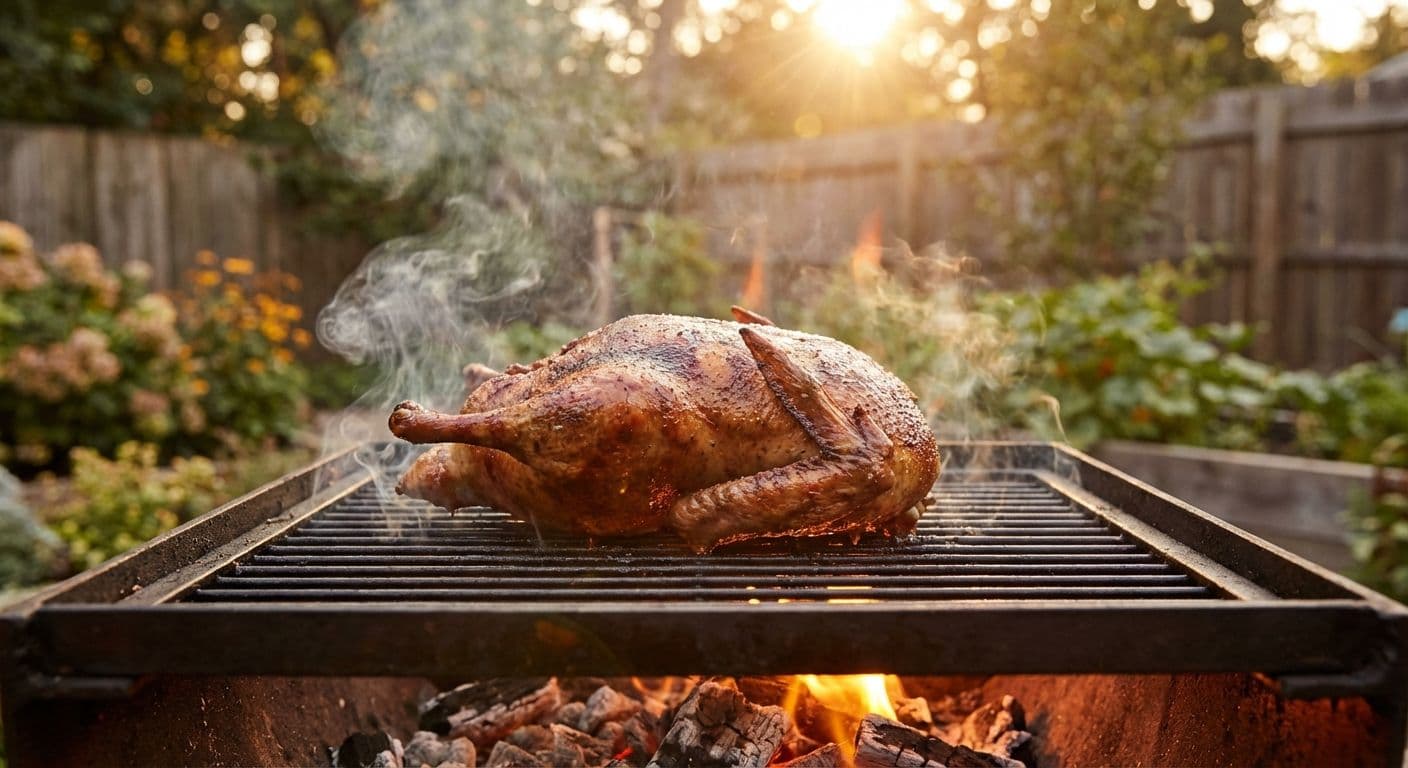
Duck carries an almost disproportionate layer of fat just under the skin, and getting that fat to render is the single most important thing between a floppy, greasy bird and one with the crackling, bite-through skin you crave. As the fat melts it bastes the meat and concentrates flavor, but if it doesn’t render away properly the skin never tightens and becomes chewy instead of crisp. Start by patting the bird thoroughly dry with paper towels, then give it a 12–24 hour air-dry in the fridge (uncovered on a rack) to dehydrate the surface. Before you smoke, poke the skin all over with a toothpick or skewer—small holes give the fat escape routes without cutting through the meat—and, if you want an extra boost, lightly score the skin in a shallow crosshatch over the fatty areas, taking care not to nick the breast meat.
How you manage that melting fat depends on your smoker. Offsets often have built-in grease drains—make sure they’re open and empty the catch regularly—while kettle grills and pellet machines need a deep foil-lined drip pan under the bird to protect the coals and collect fat for safe disposal (or to save for frying later). Use low-and-slow smoke at 225–275°F to coax fat out, then raise the heat or move the duck over direct heat at the end to crisp and caramelize. Because sugar burns, apply your maple-forward dry rub early for flavor development but wait to paint on sticky elements like habanero honey or extra maple sugar until the last 10–15 minutes of cooking so you get glossy, blistered caramelization instead of blackened char. The finished skin should look tight and blistered, feel firm and glassy to the touch, and actually snap or crackle with an audible crisp when you tap it—those are the signs you’ve rendered the fat properly and locked in perfect texture.
Finally, manage flare-ups by keeping a spray bottle of water (or a lid handy) and keeping the drip pan clean; and once the duck is out, let it rest briefly so residual fat redistributes and the skin retains its crispness when you carve.
Frequently Asked Questions
Bringing It All Together for the Holiday Feast
Serve this smoked duck like the showpiece it is: let it rest 10–15 minutes, then carve at the table to release a wisp of smoke and warm juices for your guests. Slice the breasts against the grain into pink, tender medallions and separate the legs and thighs for easier passing. Warm the reserved habanero honey gently and offer it in a small pitcher so everyone can drizzle a glossy, spicy-sweet ribbon over their slice — the heat should sing behind the maple sweetness, not overpower it. Tuck a few roasted garlic cloves on the platter and scatter blood orange wedges so diners can squeeze a bright, citrus finish over the rich meat.
Pairings that stand up to sweet heat and pecan smoke are all about balance: earthy roasted root vegetables (carrots, parsnips, and beets) tossed in some rendered duck fat and a pinch of thyme will caramelize beautifully and echo the meat’s richness; a buttery cornbread dressing made with the duck’s drippings and chopped pecans adds homey texture and a toasty note; and a bright cranberry–orange relish or quick chutney cuts through the sweetness with lively acidity. Small touches — a scattering of chopped pecans, a few sprigs of thyme, or a smear of softened butter on warm rolls — make the spread feel festive and cohesive.
Make this your new holiday habit: smoked duck is at home on Thanksgiving or Christmas, and it’s equally welcome at a smaller gathering where bold flavors shine. Don’t be afraid of the deep, dark skin — a deep mahogany to near-black crust is a sign of confident smoking and caramelized maple-chile glaze, not a mistake. If you prefer a crisper finish, score the breast skin before cooking and finish briefly over higher heat to render fat and tighten the skin. Above all, experiment: adjust the heat in the honey, try different wood blends, or use leftover slices for savory sandwiches the next day — this bird rewards curiosity.