Make Tenderloin Your Thanksgiving Showstopper
Swap the bird for ultra-marbled, wagyu-level tenderloin steaks that sear to a caramelized crust and finish buttery-soft inside. This approachable guide walks you through choosing prime cuts, trimming and portioning, smart seasoning, and foolproof grilling techniques so you can serve a luxurious, crowd-pleasing centerpiece with confidence.
1. Why Tenderloin Steaks Belong on the Thanksgiving Table
Swap the slow-roasted turkey for beef tenderloin steaks and you instantly change the holiday’s mood from comforting to celebratory. A properly seared filet develops a mahogany crust that gives way to a silky, whisper-soft center—every bite is plush and almost weightless in the mouth. That contrast between a toasty exterior and a melt-in-your-mouth interior creates the kind of table drama that makes Thanksgiving feel like an occasion instead of an obligation.
What makes tenderloin special is simple anatomy: it’s the psoas major, a small, protected muscle that does very little work, so it stays naturally tender. The flavor is clean and mild compared with fattier cuts, which is an advantage at a holiday table—those subtle beefy notes play beautifully with classic Thanksgiving sides like buttery mashed potatoes, herb-roasted vegetables, pan sauces, and bright cranberry or red-wine reductions. Because the meat is so forgiving, a light seasoning and high-heat sear will showcase the texture and let complementary sauces do the heavy lifting.
Tenderloin is a splurge worth making for small gatherings, steak-loving families, or as a decadent “second main” alongside a carved turkey. Portion expectations keep things practical: plan on roughly 6–8 ounces per person if steaks are served with sides and another main, and 8–10 ounces if they’re the primary entree. A whole trimmed tenderloin generally runs 4–6 pounds and will yield roughly 8–14 six-ounce steaks, depending on how heavily it’s trimmed (about 8 from a 4‑lb trimmed piece up to 14 from a 6‑lb trimmed piece), so you can scale purchases to fit your guest list. And if you want to go all-in for one night a year, ultra-marbled wagyu or a top-grade domestic tenderloin turns every forkful into a buttery, almost sweet celebration of beef.
2. Choosing the Right Tenderloin: Grades, Marbling, and Budget
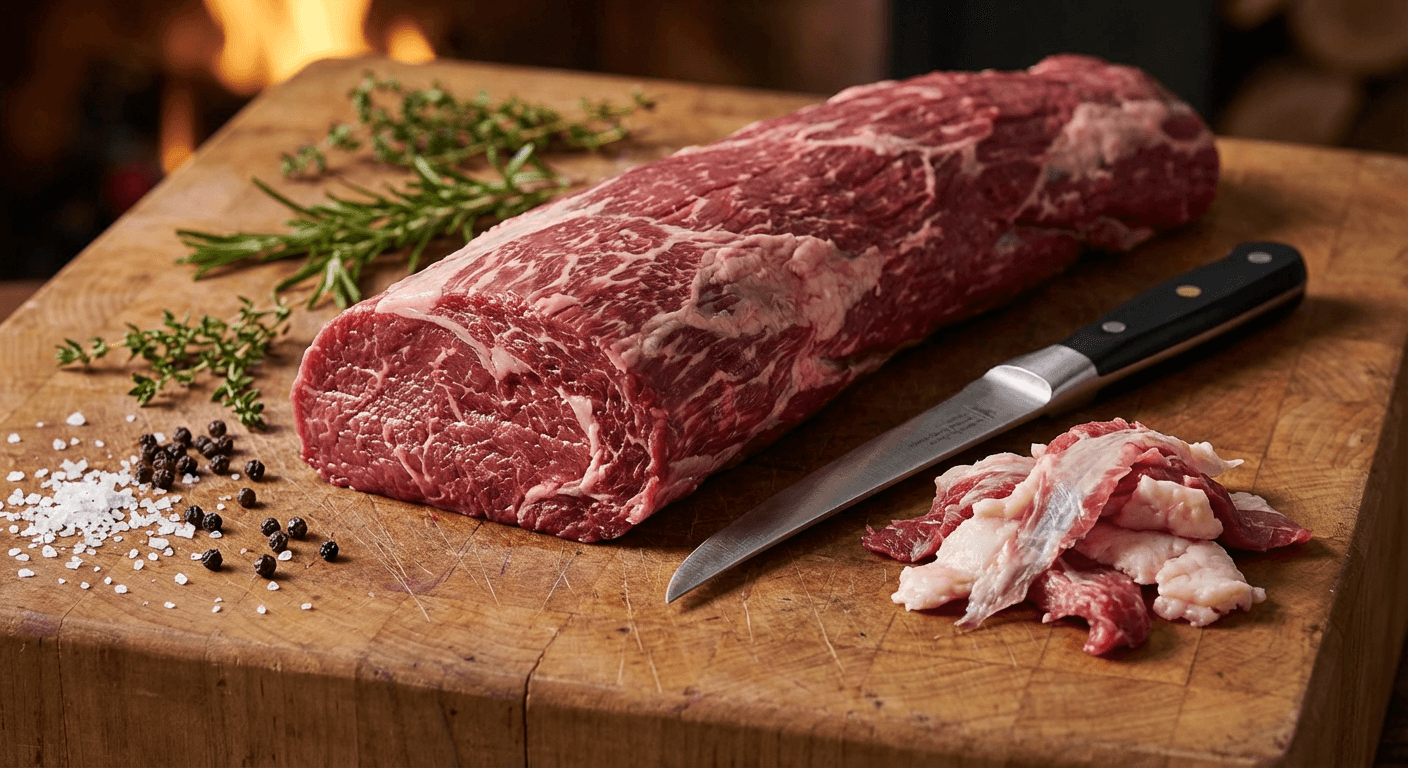
When you’re shopping for a whole tenderloin, the grading conversation usually centers on USDA grades—Prime, Choice, Select—and what those grades mean for marbling and flavor. Tenderloin is naturally the most tender cut on the animal, so even a Choice tenderloin will sear up velvet-soft. The practical difference between grades is mostly about intramuscular fat: Prime shows the most marbling and gives more juiciness and beefy depth at every bite, Choice is a sweet spot for many cooks, and Select will be leaner and milder.
Marbling—those white ribbons and flecks of fat inside the muscle—is the single biggest visual clue to how a steak will taste and feel. In wagyu the marbling is ultra-fine and almost lacy; on the Japanese scale you’ll see beef marbling scores (BMS) that go as high as 12, and the highest grades (A5) usually sit at BMS 8–12. That kind of webbed fat melts into the meat and gives a silky, buttery mouthfeel. Standard domestic beef will show broader, less dense streaks (think BMS 2–4 equivalent), which still grills beautifully but won’t have the same melt-in-your-mouth richness.
Price ranges vary a lot, so match purchase to purpose: a supermarket whole tenderloin is often the most economical route and will typically be the best value if you’re feeding a crowd or planning to sauce or dress the steaks. Expect specialty purveyors and certified Prime to cost noticeably more, and authentic A5 wagyu or imported highly marbled beef to jump into premium pricing. Pay more when you want dramatic marbling and to serve small, high-impact steaks; pick mid-range Prime/Choice when you want excellent flavor without breaking the bank.
Inspect the tenderloin visually before you buy: look for an even, cylindrical shape (easier to slice consistent steaks), fine marbling throughout, and a fresh rosy color. Avoid pieces with dark patches, large areas of oxidation (brown or gray edges), or excessive surface drying. Practical holiday buying tips: order early—special cuts and high-end grades disappear fast—ask your butcher to leave extra external fat and silver skin if you plan to trim at home, and request vacuum-sealing for transport and storage. If you’re curious about aging, note that tenderloin doesn’t benefit as much from long dry-aging as fattier cuts do, so a short wet-age (a week or two) is often sufficient. Finally, tell the butcher the thickness you want for steaks—1½ to 2 inches is a great target for a restaurant-style sear and a tender, juicy center.
3. Trimming and Cutting: From Whole Tenderloin to Perfect Steaks
A whole beef tenderloin is three distinct parts: the head (often sold as chateaubriand), the center-cut — the stout, uniformly thick section that yields the most consistent, restaurant-quality steaks — and the tapered tail, which is thinner and better suited to small filets or medallions. For Thanksgiving showstoppers you want the center-cut for your prime steaks; the head can make an impressive single roast or larger steaks if you prefer, while the tail and chain are perfect for secondary uses so nothing goes to waste.
Trimming is a methodical, almost surgical task: start by freeing the tenderloin of the silverskin — that pearly, silvery membrane — by sliding a sharp boning knife under it and angling slightly upward so you remove the membrane without shaving the underlying muscle. Next, trim away ragged edges and any excess surface fat or the long “chain” of connective tissue running alongside the muscle, using small, controlled strokes and keeping the knife blade nearly parallel to the meat to preserve the core. Work slowly, rest the piece chilled for 15–30 minutes if it feels too floppy, and think in terms of shaping a satin-smooth log rather than hacking at it; clean, careful work pays off with prettier steaks and far more even cooking.
When it’s time to portion, aim for thicknesses in the 1.75–2 inch range — thick enough to get a deep, caramelized crust while keeping a luscious medium-rare pink center after searing and resting. Thickness matters because thinner cuts will overcook before you develop that crust; thicker cuts allow for a two-stage cook and a perfect gradient of doneness. For consistency, measure with a ruler or wrap kitchen twine around the loin at even intervals as visual guides before you slice; a chilled tenderloin holds its shape and slices cleaner. Save the trimmings: two-inch ends and off-cuts become petite filets or kebab cubes, irregular bits make excellent tartare or a grinder’s dream for decadent burgers, and the chain can be trimmed into buttery medallions — nothing needs to be wasted.
Pro Trimming & Safety
Chill the tenderloin until just firm (about 34–40°F / 1–4°C) so the silver skin and fat lift cleanly, then use a very sharp boning or fillet knife and make small, controlled strokes to trim neatly. Wear a cut‑resistant glove on the hand holding the meat and always cut away from your body to keep trimming safe and approachable.
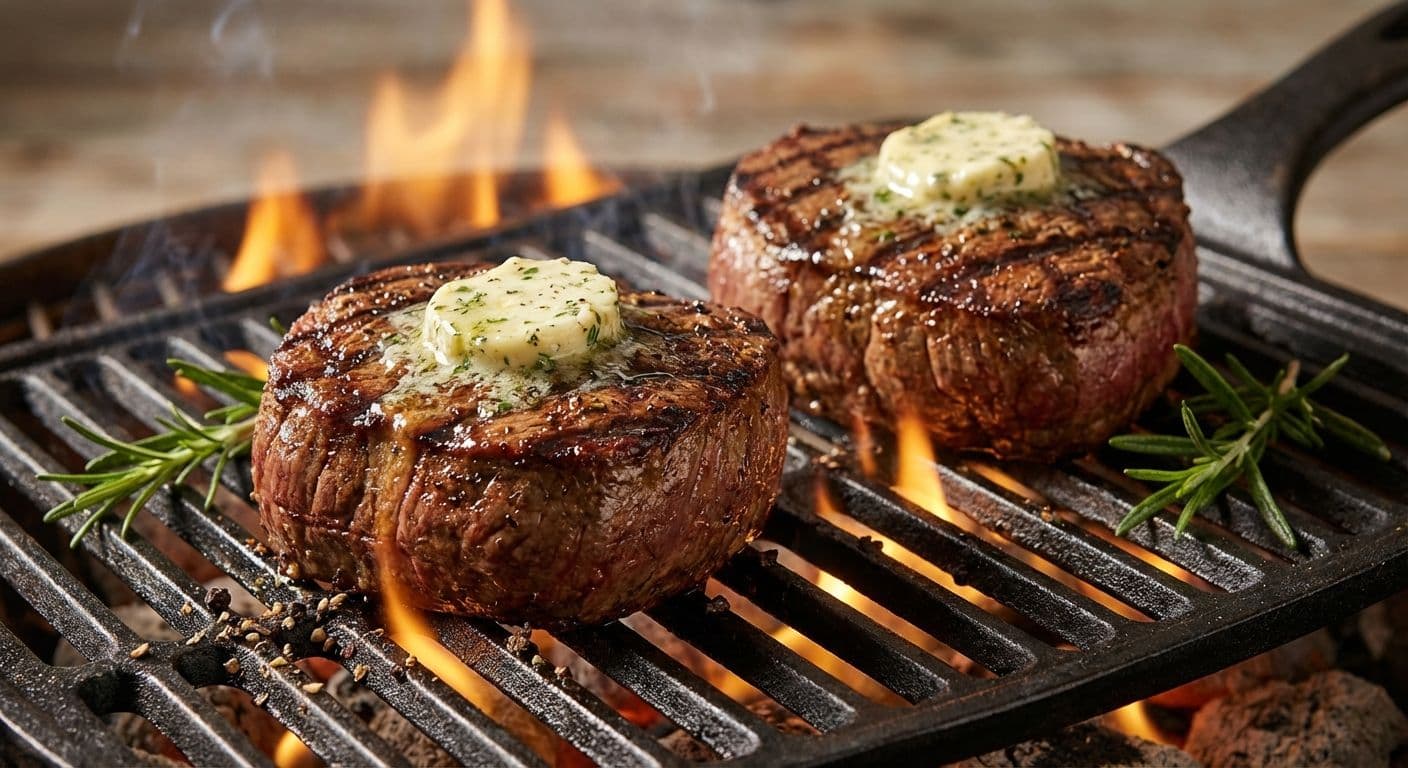
Grilled Thanksgiving Tenderloin Steaks with Herb-Garlic Butter
Tenderloin steaks dry-brined and grilled using a sear-then-roast or reverse-sear method, finished with a bright herb-garlic butter or a quick red wine pan sauce for a holiday-ready centerpiece.
Ingredients
- Beef tenderloin steaks, trimmed3 lb (about six 6–8 oz steaks)
- Kosher salt2 teaspoons per pound
- Freshly ground black pepper2 teaspoons
- Grapeseed or canola oil2 tablespoons
- Unsalted butter (softened)4 tablespoons
- Garlic2 cloves, minced
- Fresh parsley2 tablespoons, chopped
- Fresh thyme1 tablespoon, chopped
- Lemon zest1 teaspoon
- Shallot1 small, minced (for pan sauce, optional)
- Dry red wine1/2 cup (for pan sauce, optional)
- Beef stock1/2 cup (for pan sauce, optional)
- Flaky sea salt1 teaspoon (for finishing)
Steps
- 1
Trim silver skin and any excess fat from the tenderloin steaks.
- 2
Pat the steaks dry with paper towels.
- 3
Generously season both sides with kosher salt (about 2 teaspoons per pound) and refrigerate uncovered for 1–24 hours to dry-brine.
- 4
Remove steaks from the refrigerator 45 minutes before cooking and pat dry again.
- 5
Brush both sides lightly with grapeseed oil and season with freshly ground black pepper.
- 6
Set up the grill two-zone with high heat on one side and low or indirect heat on the other for sear-then-roast cooking.
- 7
If steaks are thicker than 1.5 inches, use the reverse-sear by cooking over indirect heat at about 250°F until 10–15°F below target, then finish with a hot sear.
- 8
For the direct-sear method, sear steaks 1–2 minutes per side over high heat, then move them to indirect heat to finish to your target temperature.
- 9
Use an instant-read thermometer and aim for pull temperatures of 115–120°F for rare, 125–130°F for medium-rare (recommended), and 135–140°F for medium, allowing about 5°F of carryover.
- 10
Note: For food safety, the USDA recommends cooking whole-muscle beef to a minimum internal temperature of 145°F followed by a 3-minute rest; adjust your target temperature accordingly.
- 11
Remove steaks from the grill when they reach the pull temperature and loosely tent with foil to rest for 8–12 minutes.
- 12
Make the herb-garlic butter by combining 4 tablespoons softened unsalted butter with 2 minced garlic cloves, 2 tablespoons chopped parsley, 1 tablespoon chopped thyme, 1 teaspoon lemon zest, and a pinch of salt and pepper.
- 13
Alternatively, make a quick red wine pan sauce by sautéing 1 minced shallot, deglazing with 1/2 cup red wine, reducing by half, adding 1/2 cup beef stock, and finishing with 1 tablespoon cold butter off the heat.
- 14
Slice the rested steaks against the grain into medallions and top each portion with a pat of herb-garlic butter or a spoonful of red wine sauce.
- 15
Arrange the medallions on a warmed platter, finish with a sprinkle of flaky sea salt, and serve alongside mashed potatoes and roasted seasonal vegetables for a Thanksgiving spread.
Tenderloin steaks dry-brined and grilled using a sear-then-roast or reverse-sear method, finished with a bright herb-garlic butter or a quick red wine pan sauce for a holiday-ready centerpiece.
Ingredients
- Beef tenderloin steaks, trimmed3 lb (about six 6–8 oz steaks)
- Kosher salt2 teaspoons per pound
- Freshly ground black pepper2 teaspoons
- Grapeseed or canola oil2 tablespoons
- Unsalted butter (softened)4 tablespoons
- Garlic2 cloves, minced
- Fresh parsley2 tablespoons, chopped
- Fresh thyme1 tablespoon, chopped
- Lemon zest1 teaspoon
- Shallot1 small, minced (for pan sauce, optional)
- Dry red wine1/2 cup (for pan sauce, optional)
- Beef stock1/2 cup (for pan sauce, optional)
- Flaky sea salt1 teaspoon (for finishing)
Steps
- 1
Trim silver skin and any excess fat from the tenderloin steaks.
- 2
Pat the steaks dry with paper towels.
- 3
Generously season both sides with kosher salt (about 2 teaspoons per pound) and refrigerate uncovered for 1–24 hours to dry-brine.
- 4
Remove steaks from the refrigerator 45 minutes before cooking and pat dry again.
- 5
Brush both sides lightly with grapeseed oil and season with freshly ground black pepper.
- 6
Set up the grill two-zone with high heat on one side and low or indirect heat on the other for sear-then-roast cooking.
- 7
If steaks are thicker than 1.5 inches, use the reverse-sear by cooking over indirect heat at about 250°F until 10–15°F below target, then finish with a hot sear.
- 8
For the direct-sear method, sear steaks 1–2 minutes per side over high heat, then move them to indirect heat to finish to your target temperature.
- 9
Use an instant-read thermometer and aim for pull temperatures of 115–120°F for rare, 125–130°F for medium-rare (recommended), and 135–140°F for medium, allowing about 5°F of carryover.
- 10
Note: For food safety, the USDA recommends cooking whole-muscle beef to a minimum internal temperature of 145°F followed by a 3-minute rest; adjust your target temperature accordingly.
- 11
Remove steaks from the grill when they reach the pull temperature and loosely tent with foil to rest for 8–12 minutes.
- 12
Make the herb-garlic butter by combining 4 tablespoons softened unsalted butter with 2 minced garlic cloves, 2 tablespoons chopped parsley, 1 tablespoon chopped thyme, 1 teaspoon lemon zest, and a pinch of salt and pepper.
- 13
Alternatively, make a quick red wine pan sauce by sautéing 1 minced shallot, deglazing with 1/2 cup red wine, reducing by half, adding 1/2 cup beef stock, and finishing with 1 tablespoon cold butter off the heat.
- 14
Slice the rested steaks against the grain into medallions and top each portion with a pat of herb-garlic butter or a spoonful of red wine sauce.
- 15
Arrange the medallions on a warmed platter, finish with a sprinkle of flaky sea salt, and serve alongside mashed potatoes and roasted seasonal vegetables for a Thanksgiving spread.