Tiny Brisket Point, Titanic Fat Seam
You bought a 2–3 lb brisket point with a giant ribbon of fat and now you’re wondering what to do. Don’t panic — this is a common butcher’s surprise, not a ruined meal. In this guide I’ll show when to smoke it low-and-slow, when to braise it for silky results, and what to buy next time for a perfect dinner for two.
Why Small Brisket Points Are So Tricky
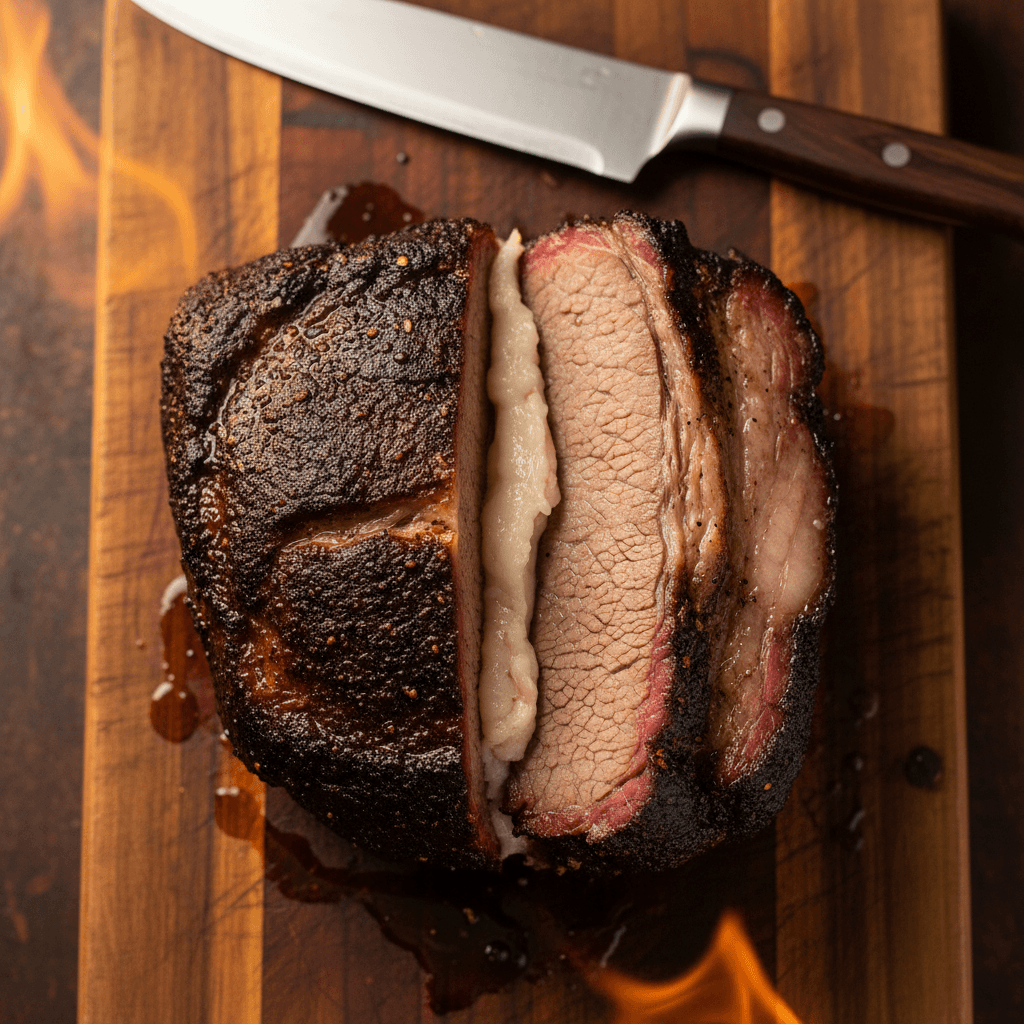
A quick anatomy lesson clears the fog: the brisket is two distinct muscles — the flat (the leaner, uniform slice) and the point (the thicker, more marbled chunk). Running between and through those muscles is the deckle, a dense, sometimes paper‑thin but often very thick seam of fat and connective tissue. In a whole packer brisket that deckle sits across a lot of beef and slowly softens; in a tiny 2–3 pound point that same strip can look like a solid, waxy barrier you can’t coax into melting away.
That fat seam is what gives the point its indulgent, unctuous character when handled correctly, but it’s also why small pieces misbehave. Thick fat needs time and even heat to render; it insulates the inner muscle, slows heat penetration and can remain stubbornly firm instead of turning silky. On a tiny trimmed piece the cook time shortens, surface area to volume changes, and you end up either with a slice that still has that waxy, chewy strip or you’ve overcooked the surrounding meat trying to coax it to melt.
The science behind tenderness explains the sad fate of the smoked hockey puck: tenderness comes from collagen turning into gelatin over long, low cooking — and from retaining moisture. A full packer, with lots of connective tissue and mass, spends hours at low temperature so collagen gradually converts long before the meat dries out. A small point reaches target temperatures quickly, loses juice faster than collagen can convert, and finishes tough instead of silky. So if you try to treat a 2–3 pound point exactly like a whole brisket you’re setting yourself up for a dry, leathery result rather than the melt‑in‑the‑mouth bite you want.
Option 1: Treat It Like Short Rib—Smoke, Then Braise
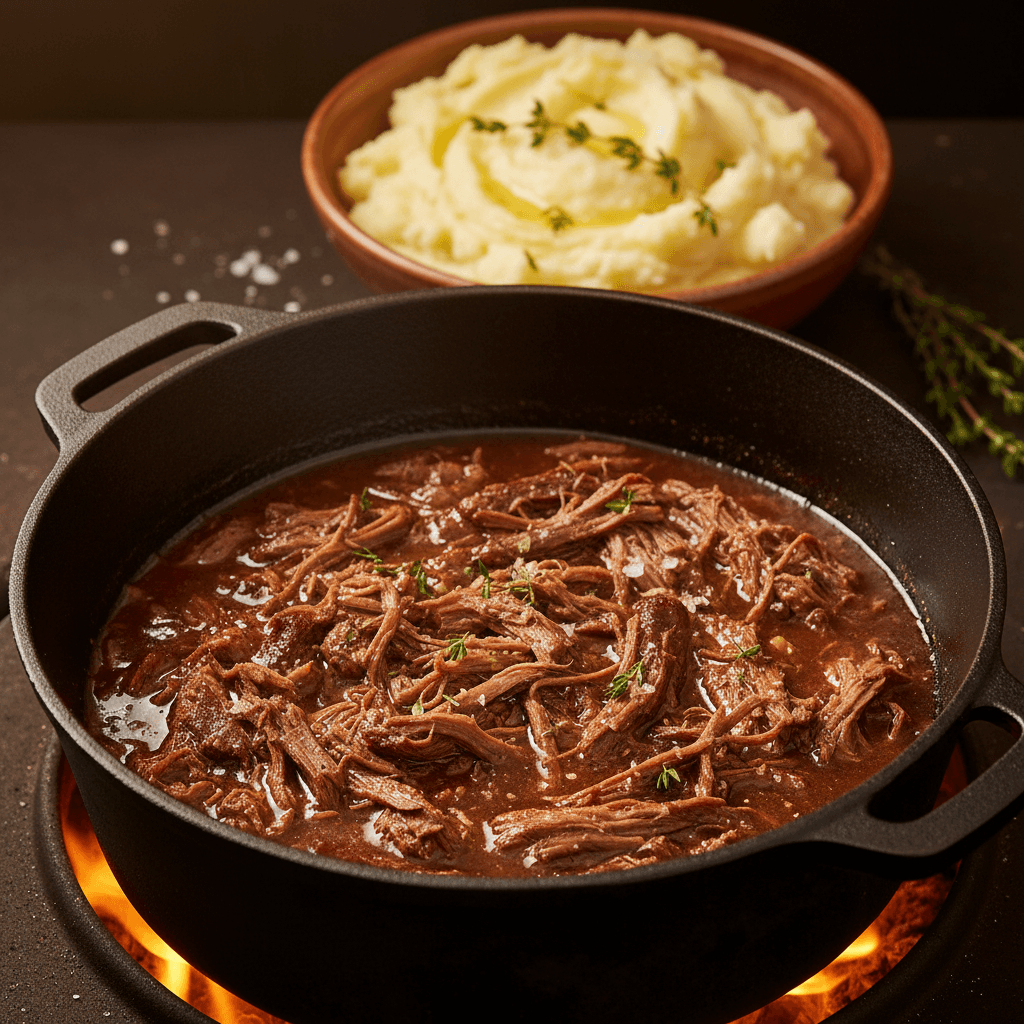
If your brisket point is small and carries a thick fat seam, the most forgiving route is to treat it like short rib: a little smoke for flavor, then a covered braise until it’s fall-apart tender. Start by trimming only the hard exterior fat and any loose silver skin—don’t gut the piece. The intramuscular and deckle fat are flavor and moisture; they’ll anchor tenderness during the long, wet cook. Season simply with kosher salt, cracked black pepper and a little garlic powder or smashed fresh garlic so the braise has a clean beefy base.
Smoke at 250–275°F just long enough to develop color and a light bark—think 45–90 minutes on a roughly three-pound point, or until the surface reads and smells like smoked beef. Don’t worry about hitting a precise internal temp at this stage. Transfer the piece to a Dutch oven or heavy covered pan and add a cup or two of beef broth, stock, or a splash of red wine plus aromatics like sliced onions, smashed garlic and a bay leaf. Braise in the oven or the smoker at roughly 275–300°F, covered, until a probe slides in like softened butter—often when the meat lands in the 200–210°F range, but tenderness is the real cue. Rest the meat 20–30 minutes, then shred or slice thick against the grain. Use the braising liquid as a jus: skim or chill to remove excess fat, strain and reduce to concentrate flavor. Serve the rich, silky meat over mashed potatoes, creamy polenta or buttered egg noodles and spoon the jus or a quick gravy over the top for the most satisfying results.
Don't smoke like a full brisket
A tiny point with a huge fat seam won’t behave like a whole brisket — the fat often won’t render and the small mass cooks too fast, leaving tough, dry meat. Trim or butterfly the piece and either braise/sous-vide to break down connective tissue or convert it into burnt-end style bites for a reliably tender result.
Other Paths: Sous Vide, Jerky, or Pressure-Cooked Gold
If you want to lean into the point’s richness rather than fight it on the smoker, sous vide is a brilliant “fake brisket” play. Two common approaches work: a lower‑temperature, long cook (about 135°F for 24–48 hours) concentrates flavor and yields a very tender, braise‑like texture, while a higher‑temperature, shorter cook (155–165°F for 12–16 hours) gives you a silkier, sliceable result at the lower end and a more shreddable, fall‑apart texture at the upper end. After the bath chill in an ice bath to firm the meat for handling, pat dry, and finish by blasting on a hot cast‑iron or briefly smoking at 275°F for 15–30 minutes to build a thin bark and a kiss of smoke. Note on food safety: lower‑temp long cooks require sufficiently long times to achieve pasteurization—if you’re unsure, follow established sous‑vide pasteurization tables or choose the higher‑temp/shorter‑time option.
The pressure cooker or Instant Pot is another forgiving route. Brown the whole point or cut it into large cubes to speed things up, add a cup or so of beef broth with aromatics (onion, garlic, bay), seal and cook on high pressure until the meat shreds easily—roughly 45–75 minutes depending on size, plus natural release. The result is spoon‑tender meat and glossy, gelatin‑rich jus that makes incredible tacos, saucy sandwiches, or a decadent baked‑potato topping; finish briefly under a broiler or on a hot griddle to crisp edges if you want contrast.
If snacks are the goal, brisket point can produce deeply beefy jerky—slice very thin across the grain (about 1/8–1/4"), salt or marinate to taste, blot dry, and dehydrate or dry in a low oven or smoker at 145–160°F until leathery (a few hours, depending on thickness). A practical caveat: this cut is fatty, and large pockets of fat don’t dry or store well, so trim hard, waxy deposits before slicing; a little marbling, though, gives concentrated umami. Food‑safety note: because drying at lower temperatures can increase food‑safety risk, consider heating strips to an internal temperature of 160°F (or follow USDA/FSIS guidance) before or during dehydration—lower temps require longer times and carry greater risk. All three approaches embrace the point’s fat and connective tissue—convert collagen to gelatin or concentrate flavor—rather than trying to make a small, fatty piece behave like a long, traditional smoker run.