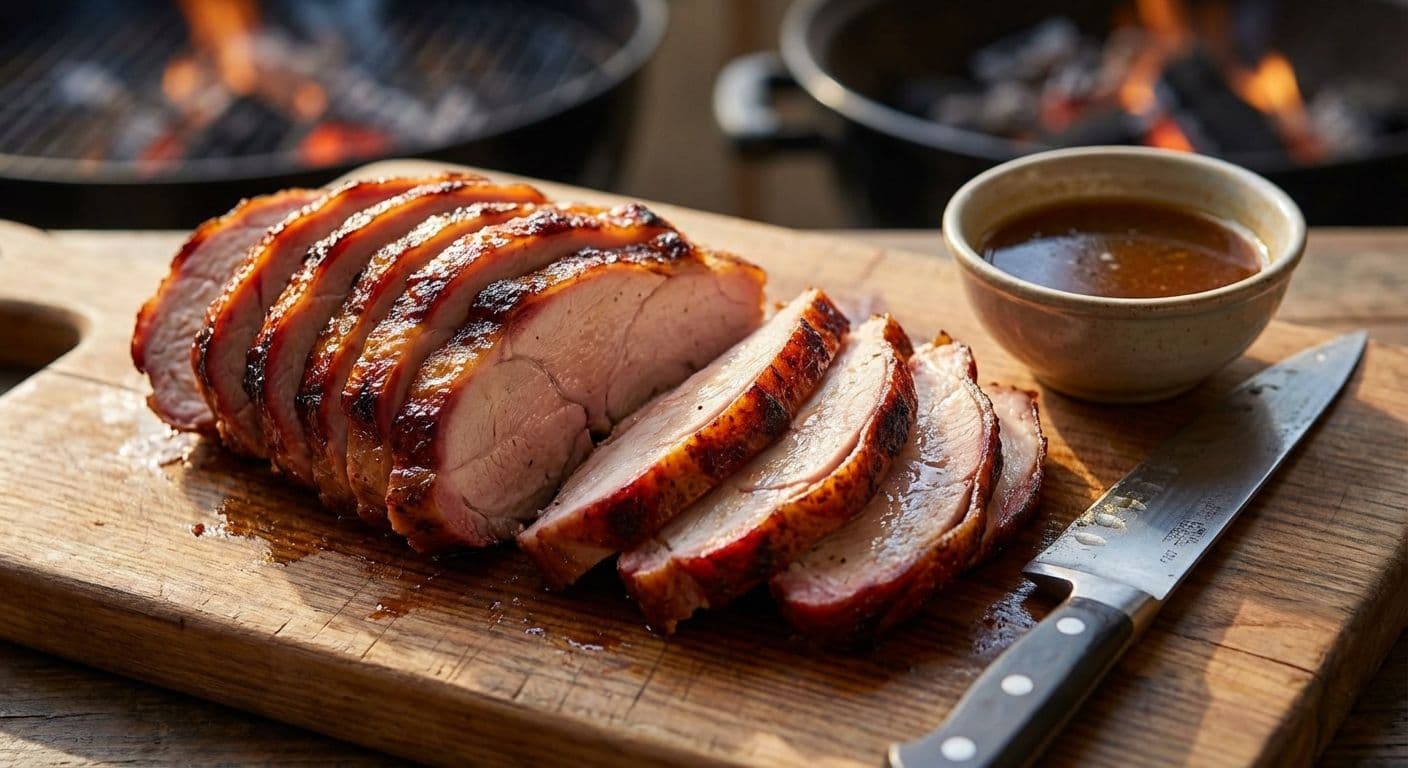
Smoked Turkey Is Absolutely Worth It
A practical guide to turning turkey from dry and bland into juicy, smoky, unforgettable perfection. If you think smoking a turkey is more fuss than flavor, this guide will change your mind — I’ll walk you through the exact techniques, temperatures, timing, and flavor strategies that produce a bronzed, herb‑buttered bird with lacquered skin and meat that stays moist from breast to thigh.
Why Smoke Your Turkey? Flavor, Freedom, and Foolproof Results
Turkey gets a bad rap for being dry, bland, and high-stress — but smoking addresses every one of those complaints. Instead of the sharp, high heat of an oven that can quickly overcook white meat, smoking uses gentle, steady temperatures that coax collagen into gelatin and keep breast meat silky. The real payoff is the flavor: slow wood smoke soaks into the skin and outer meat, lending a savory, almost nutty aroma and a deep mahogany crust that an oven simply can’t replicate. For extra richness and to guard against dryness, slip a compound butter or herb paste under the skin before it hits the smoker; that layer of fat and seasoning bakes into the meat for moist, herb-forward bites.
Smoked turkey also buys you precious real estate: while the bird is happily doing its thing outside, the oven is free for casseroles, pies, and all the sides that make the meal sing. Compared with frying, smoking is far less hazardous — no giant vat of oil, no explosive splatter — and much simpler to execute. Smoking gives you clear, achievable temperature targets and a forgiving cook window; as long as you monitor internal temperature with a probe thermometer and aim for 165°F in the thickest part of the thigh (with a short rest), the turkey will be safe and juicy.
Finally, smoking is flexible and forgiving: you can go hot-and-fast on the smoker (325–350°F) for a crisper skin and shorter cook, or low-and-slow (225–275°F) for a deeper smoke flavor and ultra-tender texture — both paths produce juicy results when you hit the right internal temps. If you’re oven-roasting or searing on a grill, higher oven/grill temps (425–475°F) are common for very rapid browning; many dedicated smokers struggle to hold those temperatures, so reserve that range for ovens or grills.
Prep Matters: Brining, Butter, and the Great Under‑the‑Skin Debate
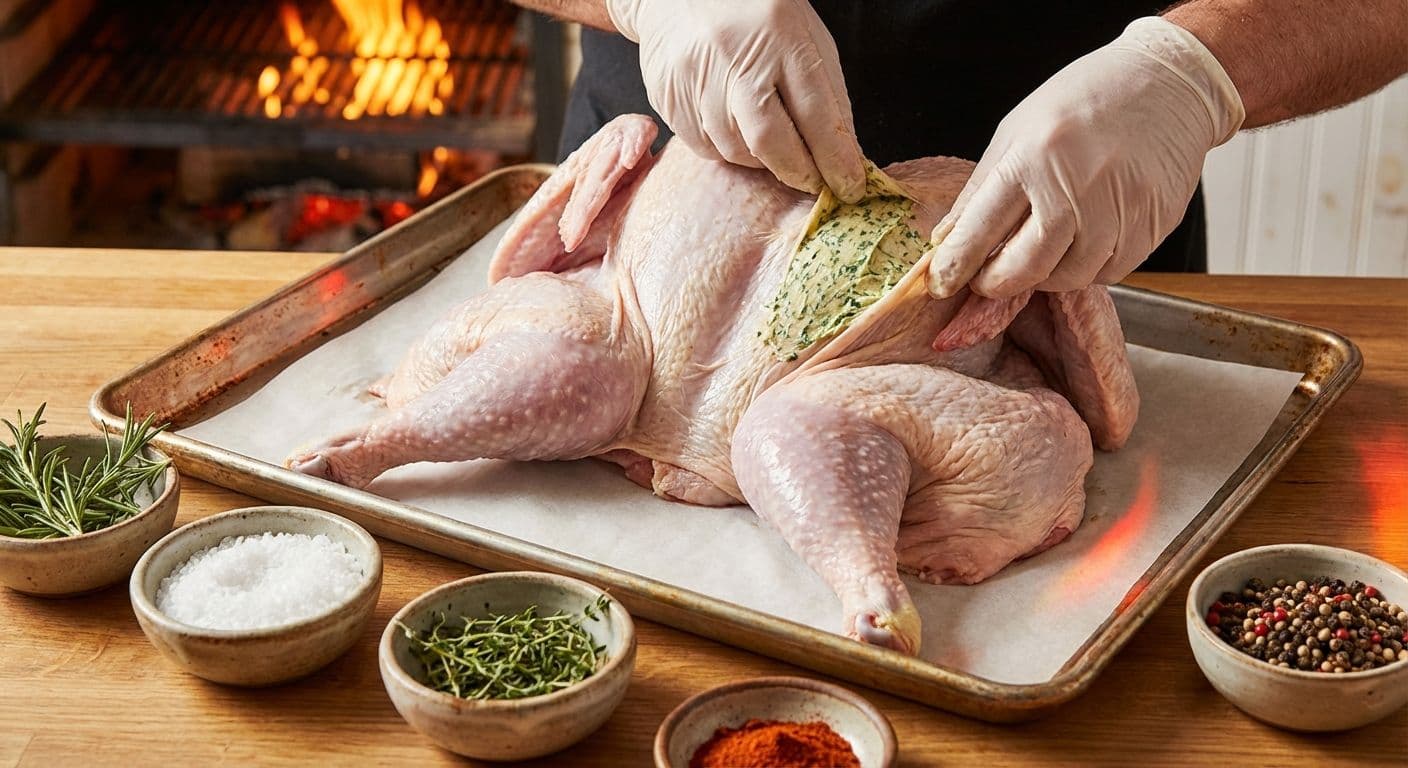
A lot of “meh” smoked turkeys come from treating the skin like the seasoning’s final stop. Skin is a great protector — it keeps moisture in — but it also acts like a barrier to flavor. Rubbing everything on top of the skin often leaves the meat under‑seasoned and the skin tasting only of smoke and oil. The classic counter is simple and sensational: slip a compound butter between skin and meat across the breast and over the thighs. Use about 1/2–1 cup (roughly 1–2 sticks) of softened butter for a 12–14 lb bird, mix in chopped herbs, smashed garlic, lemon zest and a pinch of kosher salt, then massage it under the skin. As the bird cooks the butter bastes the meat from the inside, bathing the breast in silky, herb‑speckled fat and giving you a roast that smells of roasted garlic and garden herbs with every pull.
If you prefer a cleaner, crisper finish, dry brining is an elegant alternative: rub 3/4–1 teaspoon kosher salt per pound over and under the skin (add pepper and other dry seasonings if you like), refrigerate uncovered for 24–48 hours, then pat dry before smoking. The salt draws out moisture, lets it reabsorb and seasons deeply while helping the skin tighten and crisp. There’s also the hot‑and‑fast school — spatchcock the bird (remove the backbone and flatten), dry brine it, and blast it at 425–475°F. No under‑skin butter, no injection, just steam‑seared meat with beautifully caramelized skin and juicy breast because the bird cooks quickly and evenly. For those chasing a competition or engineered profile, injections and commercial brines are a valid third path: inject a savory bath of melted butter/stock/apple juice and aromatics or use a formulated brine to lock in moisture and add a predictable flavor punch. The common thread is simple — consistency and correct salting beat any single “magic” product. Whether you tuck butter under the skin, let salt work overnight, or inject a solution, focus on measured salt, a good thermometer, and a little patience, and your smoked turkey will reward you with crackling skin and meat that’s truly worth the fuss.
Prep That Changes Everything
Spatchcock the turkey (remove the backbone and flatten) and rub a soft butter‑and‑herb paste between skin and breast to lock in moisture and flavor. Dry‑brine the bird with kosher salt and aromatics for 24–48 hours before smoking to deepen seasoning and promote crisp skin.
Bird Geometry: Spatchcocking, Bone-In Breasts, and Faster Cook Times
Spatchcocking is simply removing the backbone and flattening the bird so it lies in one even plane. That small bit of butchery changes everything: you get more skin and surface area exposed to smoke and heat, the thighs and drums stay closer to the hotter edges while the breast sits centered and cooks more gently, and the total cook time drops because the bird heats through evenly. The result is a bronzed, crackly skin and white meat that stays juicy instead of turning dry — especially if you slip a butter-and-herb mixture under the skin before it hits the smoker to baste the meat from within.
If you don’t want to tackle a whole bird, smoking a bone-in turkey breast is a brilliant shortcut: it’s a smaller, more predictable package that soaks up smoke flavor deeply and finishes faster. For timing, think in three temperature bands tied to equipment: low-and-slow (225–250°F) — common on charcoal or offset smokers — gives the deepest smoke penetration and best bark; expect a whole bird to take roughly 4–6 hours. Hot-and-fast (300–325°F) — well‑suited to pellet or propane smokers and manageable on a well-tended charcoal setup — will bring a large spatchcocked bird to done in about 2–3 hours, while a bone-in breast will typically finish in 1.5–2.5 hours. If you want a final crisp, a brief blast sear at 425–475°F on a hot grill or in a hot oven can brown and tighten the skin without overcooking the meat.
Cook to temperature, not the clock: aim to pull breast meat around 155–160°F and allow a 15–20 minute rest so carryover brings it into the safe 160–165°F range while the juices redistribute; thighs and drumsticks are happiest at 175–180°F. These techniques aren’t just about speed — they give you predictability on busy holidays, free up oven space, and reduce the stress of a long cook. Use a leave-in probe, position the breast toward the center of the cooker for gentler heat, and tent the bird loosely to rest — you’ll end up with moist, smoky slices that taste like the centerpiece of a holiday feast.