Smoked Turkey Is Absolutely Worth It
Juicy, smoke‑kissed meat with deep mahogany, crackling skin — without drying the bird. If the idea of spending money on a turkey only to end up with a dry disappointment has kept you from smoking one, this guide clears the fear: simple brine basics, smart wood and temperature choices, spatchcock and finish options for ultra‑crispy skin, and a straightforward timing plan that delivers consistent results. Scroll down for the full method, exact timings, and creative leftover ideas.
Why Smoke a Turkey in the First Place?
Smoking a turkey isn’t a novelty trick — it’s a flavor upgrade. Instead of the faint, single-note roast of the oven, smoking layers in a warm, savory smoke that mingles with the bird’s natural juices so every bite tastes deeper and more complex. The skin turns a glossy mahogany and the first slice teams a whisper of apple or hickory smoke with the classic turkey aroma; leftovers become star players for sandwiches, pot pies and elevated soups because that smoke carries through the meat in a way the oven can’t.
People worry the breast will dry out, and that fear is valid — turkey is an expensive test of technique. The good news: when you brine (or inject), control your smoker’s temperature, and use a few structural tricks like spatchcocking to expose more surface area, the breast will stay shockingly juicy. A practical approach is to smoke at a moderate temperature, pull the bird when the thickest part of the breast hits about 155°F, and let carryover rest bring it to a safe 165°F; the result is moist, silky white meat with crisp, smoky skin.
Spatchcocking also pays dividends beyond texture: it shortens total cook time, spreads heat more evenly, and frees the oven for sides on busy holidays. Yes, there’s an upfront cost — the bird, kosher salt for a brine, a few aromatics and a bag of good wood — but a solid plan and basic tools transform that cost into value. Use the carcass to make a deeply flavored smoked stock for gravy, soup or pot pie, and you’ll get multiple meals from one investment. If you’re nervous, follow a tested timeline, keep a reliable instant‑read thermometer on hand, and remember that a little practice yields reliably spectacular results.
The Smoked Turkey Game Plan: Spatchcock, Brine, Smoke, Crisp
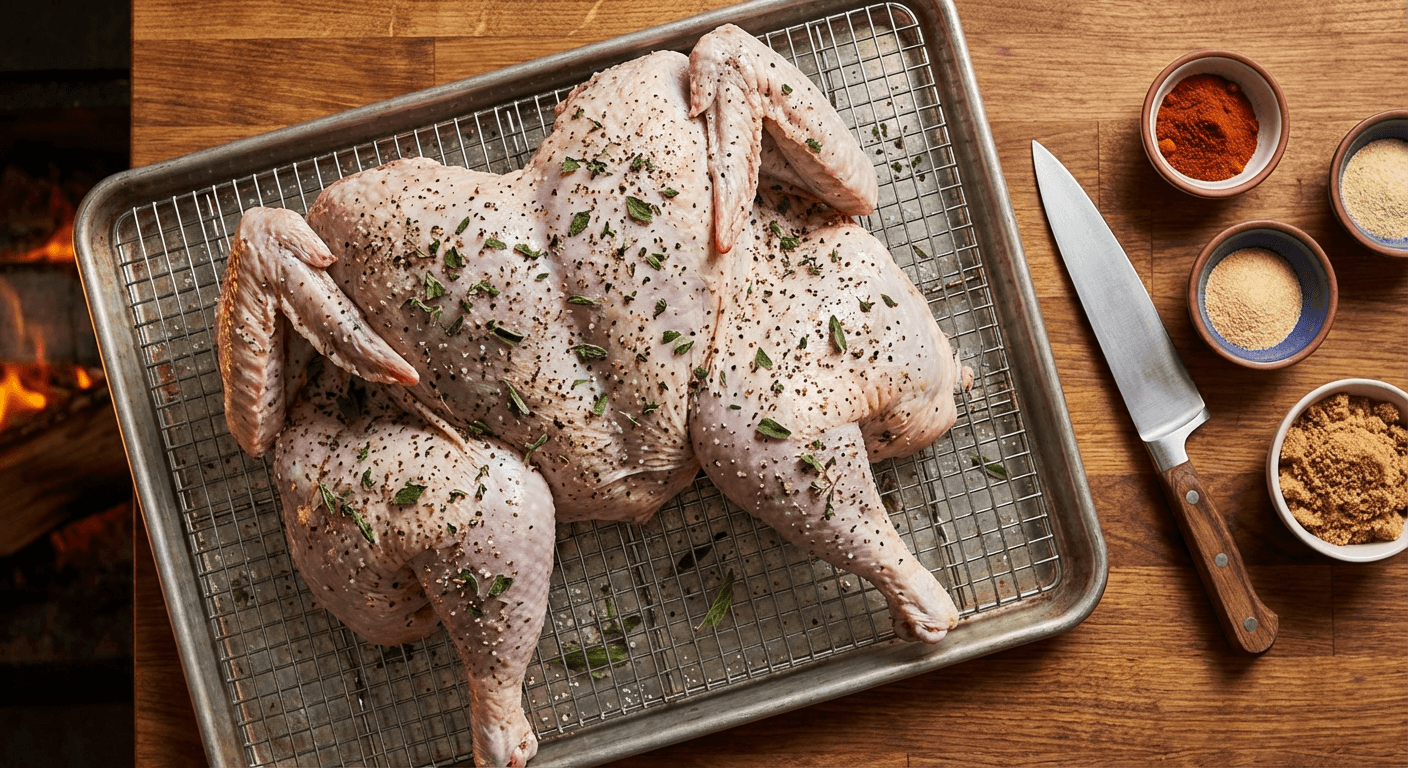
Start with the shape of the bird: spatchcocking means removing the backbone and flattening the turkey so the breast and thighs lie on one plane. That simple move is a game changer — the bird cooks faster and far more evenly, the dark and white meat finish at the same time, and a much larger area of skin is exposed to heat so you get the kind of crackling, blistered surface that makes people swoon. Pair spatchcocking with a brine and you’ve bought yourself insurance against dry meat. A dry brine (a generous salt rub and a day or two in the fridge, skin exposed) is the easiest route to concentrated flavor and superior skin crisp; a wet brine (12–24 hours in a salt-and-sugar solution) will add moisture and is forgiving if you’re nervous about timing. Both work — pick the method that fits your prep time and kitchen space, but don’t skip brining altogether.
Size matters: aim for birds in the 10–16 lb range. Bigger turkeys take far longer, develop uneven doneness, and can outpace your ability to brown the skin without overcooking the meat. For smoke strategy, think low-and-slow first to build flavor — roughly 225–275°F for the majority of the cook — then finish hot to crisp the skin: raise the grill to 375–425°F for the last 15–30 minutes or transfer to a hot oven or direct heat for a short sear. USDA guidance sets the safe minimum internal temperature at 165°F measured in the thickest part of the thigh and breast; that's the baseline for food safety. Many pitmasters, however, prefer to cook thighs to 175–185°F to break down connective tissue for silkier dark meat. For the breast, some experienced cooks pull at 155–160°F and rely on carryover heat during resting to reach 165°F for juiciness — this is a technique some use for texture, not a safety recommendation. If you want to follow government safety guidance strictly, remove the bird only once the thickest part reaches 165°F. Manage smoke carefully — mild, clean smoke (think pale blue, not billowing white) from fruitwoods or light hickory will add that woodsy sweetness without masking the turkey. Equipment-wise, a pellet grill, an offset smoker, or a kettle grill set up for indirect heat will all do the job; use an instant-read thermometer (and a probe if you have one) — it’s non-negotiable. Finish with a blast of heat, rest properly, and you’ll have juicy meat and skin that snaps with every bite.
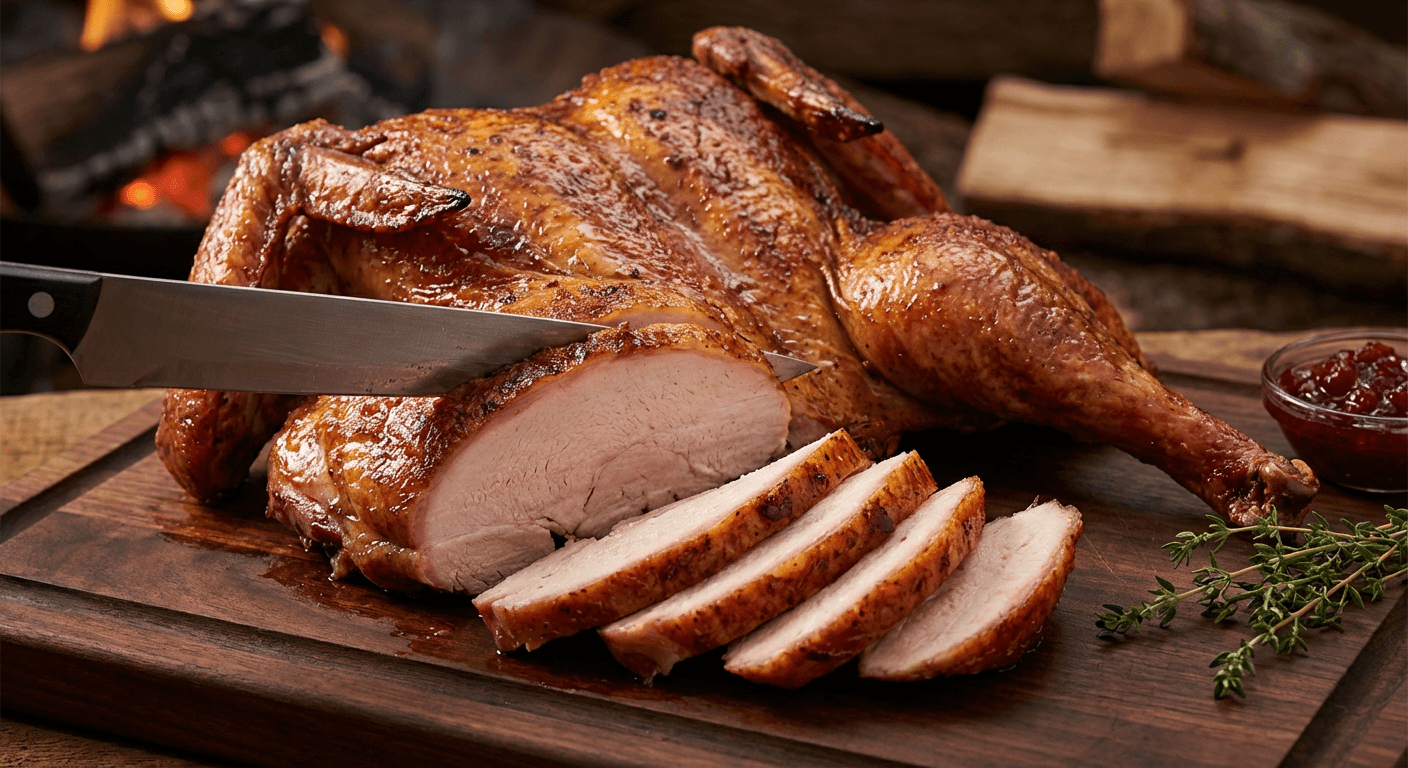
Spatchcocked Smoked Turkey with Crispy Finish
A dry‑brined, spatchcocked turkey smoked low and slow for deep flavor, then finished hot (or briefly fried) for irresistibly crispy skin and juicy meat.
Ingredients
- Whole turkey, spatchcocked12–14 lb
- Kosher salt1/2–3/4 tsp per lb (about 3–3½ tbsp for a 12–14 lb turkey)
- Brown sugar (optional)1 tbsp
- Freshly cracked black pepper1 tbsp
- Garlic powder1 tsp
- Onion powder1 tsp
- Smoked paprika1 tsp
- Unsalted butter, softened or neutral oil4 tbsp
- Fresh herbs (thyme/rosemary), chopped (optional)2 tbsp
- Lemon zest and 1 lemon, halved (optional)zest of 1 lemon + 1 halved lemon
- Whole garlic cloves (optional)4–6 cloves, smashed
- Apple wood chunks2–4 chunks
- Hickory wood chunks (small amount)1–2 chunks
- Neutral oil for skin and grill finishing2 tbsp
- Vegetable oil for optional deep‑fry finishEnough for fryer capacity (follow fryer specs and ensure fryer is rated for this size bird)
- Probe thermometer(s)1–2 (breast and optional thigh)
Steps
- 1
Thaw and pat the turkey dry and remove the neck and giblets.
- 2
Spatchcock the turkey by cutting out the backbone with kitchen shears and pressing the breastbone flat.
- 3
Tuck wing tips behind the shoulders and splay the legs so the bird lies flat.
- 4
Mix the dry brine by combining the kosher salt, brown sugar (optional), black pepper, garlic powder, onion powder, and smoked paprika.
- 5
Loosen the skin over breasts and thighs and rub some of the dry brine directly onto the meat under the skin.
- 6
Rub the remaining dry brine evenly over the skin and any exposed cavities.
- 7
Place the turkey on a rack uncovered in the refrigerator to dry‑brine and air‑dry overnight (12–24 hours).
- 8
Remove the turkey from the fridge about 1 hour before cooking to take off chill.
- 9
Pat the skin dry again and brush lightly with neutral oil or softened butter for better browning.
- 10
Preheat your smoker and stabilize the temperature at 250–275°F.
- 11
Add apple wood chunks with a small amount of hickory for backbone smoke and position a drip pan under the grate.
- 12
Insert a probe thermometer into the thickest part of the breast and optionally into a thigh without touching bone.
- 13
Place the turkey skin‑side up on the smoker and close the lid to begin smoking.
- 14
Smoke the turkey until the breast reaches 155–160°F and the thigh reaches 175–185°F, allowing for carryover cooking.
- 15
Plan roughly 3 hours of cook time for a 12–14 lb spatchcocked bird but always go by internal temperature.
- 16
When the breast nears the lower end of its target temp, prepare to crisp the skin.
- 17
To crisp in the smoker, raise the temperature to 375–400°F and continue until the skin is golden and crackly, about 10–20 minutes.
- 18
To crisp on a hot grill, move the turkey to a preheated high‑heat zone (around 500°F) for 5–10 minutes while monitoring for flare‑ups.
- 19
Optional deep‑fry finish — CAUTION: Deep‑frying a large spatchcocked turkey can be hazardous and requires the correct fryer, sufficient oil volume, and experience. Only attempt if you have a fryer explicitly rated for a 12–14 lb spatchcocked turkey and you follow the manufacturer's instructions. Ensure the turkey is completely dry, never overfill the fryer, lower the bird slowly to avoid overflow, work outdoors on a non‑combustible surface away from structures, and monitor oil temperature and for flare‑ups. Because frying times vary with fryer size and oil volume, do not rely on a single short time; instead use a probe to verify safe internal temperatures and follow your fryer guidance. For most home cooks, prefer the high‑heat finish in the smoker, oven, or grill described in the preceding steps.
- 20
Remove the turkey from heat and tent loosely with foil, resting 20–30 minutes for juices to redistribute and carryover to finish cooking.
- 21
Carve by removing legs and thighs, then slice the breasts across the grain into even pieces.
- 22
Reserve the carcass and trimmings to make smoked stock or gravy.
- 23
Serve warm, pairing the crispy skin with the juicy smoked meat.
A dry‑brined, spatchcocked turkey smoked low and slow for deep flavor, then finished hot (or briefly fried) for irresistibly crispy skin and juicy meat.
Ingredients
- Whole turkey, spatchcocked12–14 lb
- Kosher salt1/2–3/4 tsp per lb (about 3–3½ tbsp for a 12–14 lb turkey)
- Brown sugar (optional)1 tbsp
- Freshly cracked black pepper1 tbsp
- Garlic powder1 tsp
- Onion powder1 tsp
- Smoked paprika1 tsp
- Unsalted butter, softened or neutral oil4 tbsp
- Fresh herbs (thyme/rosemary), chopped (optional)2 tbsp
- Lemon zest and 1 lemon, halved (optional)zest of 1 lemon + 1 halved lemon
- Whole garlic cloves (optional)4–6 cloves, smashed
- Apple wood chunks2–4 chunks
- Hickory wood chunks (small amount)1–2 chunks
- Neutral oil for skin and grill finishing2 tbsp
- Vegetable oil for optional deep‑fry finishEnough for fryer capacity (follow fryer specs and ensure fryer is rated for this size bird)
- Probe thermometer(s)1–2 (breast and optional thigh)
Steps
- 1
Thaw and pat the turkey dry and remove the neck and giblets.
- 2
Spatchcock the turkey by cutting out the backbone with kitchen shears and pressing the breastbone flat.
- 3
Tuck wing tips behind the shoulders and splay the legs so the bird lies flat.
- 4
Mix the dry brine by combining the kosher salt, brown sugar (optional), black pepper, garlic powder, onion powder, and smoked paprika.
- 5
Loosen the skin over breasts and thighs and rub some of the dry brine directly onto the meat under the skin.
- 6
Rub the remaining dry brine evenly over the skin and any exposed cavities.
- 7
Place the turkey on a rack uncovered in the refrigerator to dry‑brine and air‑dry overnight (12–24 hours).
- 8
Remove the turkey from the fridge about 1 hour before cooking to take off chill.
- 9
Pat the skin dry again and brush lightly with neutral oil or softened butter for better browning.
- 10
Preheat your smoker and stabilize the temperature at 250–275°F.
- 11
Add apple wood chunks with a small amount of hickory for backbone smoke and position a drip pan under the grate.
- 12
Insert a probe thermometer into the thickest part of the breast and optionally into a thigh without touching bone.
- 13
Place the turkey skin‑side up on the smoker and close the lid to begin smoking.
- 14
Smoke the turkey until the breast reaches 155–160°F and the thigh reaches 175–185°F, allowing for carryover cooking.
- 15
Plan roughly 3 hours of cook time for a 12–14 lb spatchcocked bird but always go by internal temperature.
- 16
When the breast nears the lower end of its target temp, prepare to crisp the skin.
- 17
To crisp in the smoker, raise the temperature to 375–400°F and continue until the skin is golden and crackly, about 10–20 minutes.
- 18
To crisp on a hot grill, move the turkey to a preheated high‑heat zone (around 500°F) for 5–10 minutes while monitoring for flare‑ups.
- 19
Optional deep‑fry finish — CAUTION: Deep‑frying a large spatchcocked turkey can be hazardous and requires the correct fryer, sufficient oil volume, and experience. Only attempt if you have a fryer explicitly rated for a 12–14 lb spatchcocked turkey and you follow the manufacturer's instructions. Ensure the turkey is completely dry, never overfill the fryer, lower the bird slowly to avoid overflow, work outdoors on a non‑combustible surface away from structures, and monitor oil temperature and for flare‑ups. Because frying times vary with fryer size and oil volume, do not rely on a single short time; instead use a probe to verify safe internal temperatures and follow your fryer guidance. For most home cooks, prefer the high‑heat finish in the smoker, oven, or grill described in the preceding steps.
- 20
Remove the turkey from heat and tent loosely with foil, resting 20–30 minutes for juices to redistribute and carryover to finish cooking.
- 21
Carve by removing legs and thighs, then slice the breasts across the grain into even pieces.
- 22
Reserve the carcass and trimmings to make smoked stock or gravy.
- 23
Serve warm, pairing the crispy skin with the juicy smoked meat.
Pro Tip
Dry-brine the turkey at least 24 hours ahead and leave it uncovered in the fridge to dry the skin for proper crisping; avoid overly wet or sugary rubs that glue the skin and prevent fat from rendering. Smoke primarily with fruit woods like apple or cherry and add a small amount of hickory for backbone, and resist opening the smoker—trust a leave-in probe or instant-read thermometer rather than peeking.
Frequently Asked Questions
Turning One Smoked Bird into a Weekend of Feasts
Once you get a good smoked turkey under your belt it often replaces the oven-roasted version as the family standard: the skin caramelizes into a crisp, bronzed shell, the meat takes on a slow-smoke perfume, and each slice is glossy with jus that tastes like a campfire celebration. That payoff—deep, layered flavor with a reliably juicy interior—is why the extra effort feels worth it, whether you’re feeding a holiday crowd or just craving an elevated weekend meal.
Don’t let cost or technique scare you off. Start with a smaller bird if you’re experimenting, spatchcock or halve it for faster, more even cooking, and use a probe thermometer so you’re following temperature instead of guesswork. Aim for 165°F in the thickest part of the breast (and around 175–180°F if you prefer the thigh pulled-tender), and consider a simple brine or a dry brine to keep the meat forgiving while you learn the smoke curve.
And don’t forget the weekend of feasts a single smoked bird can buy you: shredded smoked turkey makes electric sandwiches with sharp cheese, peppery arugula and a smear of cranberry; chop it into a skillet with crispy potatoes, onions and a sunny-side egg for a smoky hash; fold it into a velvety pot pie enriched with a stock made from the picked-over carcass. To make that stock, simmer the bones with mirepoix, a bay leaf and a few peppercorns, reduce and strain, then freeze in portions—those concentrated, smoky pan juices level up soups, gravy and risotto for months. Make this bird the centerpiece of your next holiday or backyard cookout and you’ll find the effort pays back in flavor, leftovers and stories worth repeating.